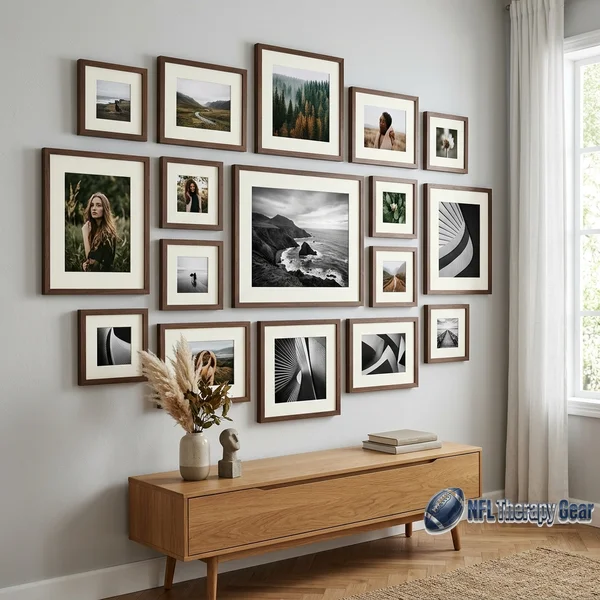
Framed images transform moments — whether captured in professional photography, personal snapshots, or artistic reproduction — into permanent display-worthy pieces that commemorate the experiences, figures, and venues that define a fan’s relationship with the game. NFL pictures and photo frames provide the presentation infrastructure that elevates images from digital files and loose prints into wall-ready decorative elements that share team stories with everyone who enters the room.
The range of NFL display options extends from simple team-branded photo frames that hold personal snapshots to elaborate shadow box presentations that combine photographs with three-dimensional memorabilia. Understanding the formats, materials, and presentation techniques available helps fans create displays that honor their images with the visual quality and preservation care they deserve.
Frame Materials and Styles
Wood Frames
Wooden frames provide the warmest, most traditional presentation for NFL-themed imagery. Hardwood frames in natural, stained, or painted finishes offer the craftsmanship quality and material character that distinguish permanent display pieces from temporary decorations. Team-colored painted frames — navy, burgundy, forest green, or other team primaries applied to solid wood moldings — create frames that integrate team identity into the frame itself rather than relying solely on the image content for team connection.
Distressed and reclaimed wood frames add rustic character that pairs effectively with vintage team imagery, historical photographs, and throwback-themed displays. The weathered texture and imperfect surfaces of distressed wood frames communicate heritage and authenticity that complement images referencing past eras of team and league history.
Metal Frames
Metal frames — aluminum, steel, or brass construction in polished, brushed, or matte finishes — provide sleek, modern presentation suitable for contemporary interiors and professional environments. Chrome and brushed nickel frames project the clean precision that modern and minimalist design aesthetics favor, creating displays that feel refined rather than rustic. Team-colored anodized aluminum frames incorporate team identity into metal construction, combining modern frame aesthetics with team-specific coloring.
Composite and Specialty Frames
Composite molding frames — constructed from wood fiber and resin mixtures — provide the visual appearance of carved wood frames at lower cost. These engineered frames replicate ornate profiles, detailed corner treatments, and dimensional surface textures that solid wood carving would price beyond casual-display budgets. For team-themed displays where frame expense should not exceed image value, composite frames provide aesthetic quality at accessible price points.
Matting and Presentation
Matting — the bordered frame within the frame that surrounds the image with a uniform margin — elevates photographic presentation from basic framing to gallery-quality display. The mat creates visual breathing space between the image and the frame, preventing the cramped appearance that direct frame-to-image contact produces. This breathing space draws the viewer’s eye inward toward the image center, creating focused viewing attention that improves the image’s visual impact.
Mat color selection affects how the image is perceived. White and off-white mats provide neutral backgrounds that suit most images without introducing color bias. Team-colored mats — in primary or secondary team hues — add team identity to the presentation border, creating a color-coordinated display that connects the frame presentation to the team’s visual brand. Double matting — using two mat layers in different colors — adds dimensional depth and design sophistication, with combinations like team-primary outer mat and white inner mat providing both team identity and the clean presentation that white matting ensures.
Acid-free matting protects images from the chemical degradation that standard paper mats cause over extended contact. Lignin and acid in conventional mat boards migrate into photographic paper, causing yellowing, foxing, and structural deterioration that permanently damage the image. Acid-free mat boards prevent this chemical interaction, providing long-term preservation appropriate for images with sentimental or monetary value worth protecting.
Shadow Boxes
Shadow boxes — deep-profile frames with recessed display cavities — accommodate three-dimensional objects alongside flat photographs, creating multi-dimensional displays that combine imagery with physical memorabilia. A shadow box displaying a game photograph alongside the ticket stub from that game, a section of the game program, and a commemorative pin creates a comprehensive visual story that a flat-framed photograph alone cannot tell.
Depth selection for shadow boxes should accommodate the thickest object in the planned display with adequate clearance for the glass front. Standard shadow box depths range from one to three inches, with deeper options available for larger memorabilia items like baseballs, jersey patches, and small collectibles. Planning the display contents before selecting the shadow box ensures adequate depth without the excessive empty space that an oversized box creates around smaller items.
Mounting memorabilia within shadow boxes requires secure but non-damaging attachment methods. Archival mounting corners, acid-free adhesive strips, and custom-cut foam mounting platforms hold items in position without the adhesive damage that permanent glues would cause. These reversible mounting methods allow future rearrangement or removal of items without the destruction that permanent attachment would require.
Collage and Multi-Photo Frames
Multi-opening collage frames hold several photographs in a single frame unit, creating curated visual narratives from image collections. Chronological sequences — images from a fan’s stadium visits arranged in date order — tell the story of a fan’s relationship with the team through a timeline of visual milestones. Thematic groupings — all stadium images, all family-at-games images, or all celebration-moment images — organize collections around shared subjects that create visual coherence within the multi-image display.
Opening configurations within collage frames vary from uniform grids (all openings the same size) to varied layouts that combine larger focal images with smaller supporting images. Asymmetric layouts with one large central opening surrounded by smaller peripheral openings create visual hierarchy that guides the viewer’s attention from the primary image outward to supporting details.
Personalized and Custom Frames
Engraved frames with custom text — names, dates, scores, commemorative messages — add personal significance that transforms a display frame from a generic presentation tool into a personalized keepsake. A frame engraved with “First Game – September 14, 2024” surrounding a photograph from that event carries biographical significance that an un-engraved frame cannot match. Custom engraving services can add text to wood and metal frames in fonts and sizes appropriate to the frame’s scale and style.
Team-specific frame designs — featuring permanently mounted team logos, mascot imagery, or stadium architectural elements as part of the frame structure — create displays where the frame itself contributes team identity independent of the image it contains. These team-specific frames ensure team presence even when the displayed image does not directly feature team branding.
Digital Photo Frames
Digital photo frames display rotating collections of images on LCD or LED screens, cycling through hundreds of photographs without the physical space requirements that framing each image individually would demand. Team-branded digital frames — in team-colored housings with team-design screen borders — bring team identity to the digital display format while providing the slideshow functionality that showcases extensive photo collections within a single frame’s physical footprint.
Wi-Fi-connected digital frames accept images sent remotely from smartphones and cloud storage, allowing family members and friends to contribute images to shared displays. A connected frame in a fan’s home can receive game-day photographs from family members at the stadium in real time, building the display collection with live contributions from multiple sources during the game itself.
DIY Frame Projects
Custom frame construction using team-specific materials creates unique display pieces that commercial frames cannot replicate. Frames built from reclaimed stadium seating wood, crafted from team-colored hardwood stains, or assembled from materials with personal team significance (wood from a tailgate table, metal from a retired stadium fixture) carry provenance stories that manufactured frames lack. These handcrafted frames become conversation pieces whose construction stories add narrative depth to the images they display.
Frame modification projects — repainting existing frames in team colors, adding team-colored mat boards to standard frames, or embellishing plain frames with team-themed decorative elements — transform generic frames into team-specific display pieces at costs below purchasing pre-made team frames. These modifications allow fans to use high-quality standard frames as the foundation, adding team customization to construction quality that licensed team frames at similar price points may not match.
Selecting Images for Display
The images selected for framed display should represent genuinely meaningful moments rather than arbitrary snapshots. Personal game-day photographs that capture emotional reactions — celebrating touchdowns, experiencing the first visit to a new stadium, or sharing the stands with family members — carry more lasting display value than technically superior photographs lacking personal connection. The most compelling framed displays combine image quality with emotional significance.
Professional photography prints — licensed stadium images, artistic action photography, and architectural venue portraits — provide display-quality image resolution and composition that smartphone snapshots may not match. These professional images serve well as focal-point displays in prominent locations, while personal photographs serve best in intimate groupings where their biographical significance resonates with household members who recognize the moments captured.
Image resolution determines maximum display size before quality degradation becomes visible. Smartphone photographs typically print cleanly up to eight-by-ten or eleven-by-fourteen inches. Professional high-resolution images can scale to poster dimensions without quality loss. Matching display size to image resolution prevents the pixelated, blurry appearance that oversized printing of low-resolution images produces.
Gifting Framed Team Images
Framed NFL photographs make thoughtful, lasting gifts that combine decorative quality with personal sentiment. A framed image from a game the recipient attended — particularly a milestone game like their first, a championship, or a record-setting performance — carries personal significance that generic team merchandise cannot achieve. Pairing the framed photograph with the game’s ticket stub mounted within the mat creates a comprehensive experience document.
Custom-framed images as wedding gifts for fan couples, retirement gifts for lifelong team supporters, or housewarming gifts for fans establishing new homes demonstrate gift-giving thoughtfulness that standard retail purchases do not communicate. The time invested in selecting a meaningful image, choosing appropriate framing, and potentially adding personalized engraving or matting text elevates the gift from object to experience acknowledgment.
Family Photo Traditions
Annual game-day family photographs — taken at the same stadium location each year, or in front of the home television before each season opener — create visual records of family growth within the context of team fandom. Framing these annual photographs in matching frames and displaying them in chronological sequence produces a visual timeline that documents both family development and fan history simultaneously.
Multi-generation displays — framing photographs of grandparents, parents, and children at team events across decades — celebrate the family’s fan legacy through visual evidence spanning multiple generations. These heritage displays communicate that team allegiance is a family tradition with deep roots, creating visual proof of the intergenerational fan bond that current family members continue.
Professional Framing Versus DIY
Professional frame shops provide precision cutting, archival-quality materials, and expert finishing that DIY framing may not achieve. Custom mat cutting to exact image dimensions, professional glass fitting, and secure frame assembly create displays of consistently high quality. The premium cost of professional framing is justified for images with significant sentimental or monetary value that deserve preservation-quality display.
DIY framing using pre-cut mats and ready-made frames provides adequate display quality for casual photographs and images where professional-level precision is unnecessary. The significant cost savings of DIY framing — often fifty percent or more below professional framing for comparable display sizes — allows fans to frame larger collections within budgets that professional framing would quickly exhaust.
Office and Professional Display
Framed team photographs in professional offices express personal identity within workplace environments where appropriate balance between personality and professionalism matters. Small-format, tastefully framed team images on desks and credenzas communicate fan identity without the overwhelming team saturation that might feel unprofessional. Selecting refined frame styles — brushed metal, natural wood, simple profiles — ensures that the frame’s quality signals professional taste alongside team allegiance.
Wall Arrangement Strategies
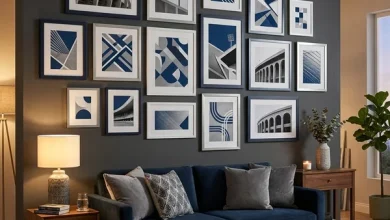
Gallery wall arrangements of framed team photographs create visual installations that fill wall space with curated image collections. Planning the arrangement before hammering nails — using paper templates cut to each frame’s dimensions and taped to the wall for positioning evaluation — prevents the costly trial-and-error nail placement that damages walls when frames are repositioned after initial hanging.
Consistent frame styles within a gallery wall create visual unity, while mixed frame styles create eclectic visual energy. Matching all frames in a collection — same color, same material, same profile — produces a clean, museum-like presentation. Mixing frame styles — combining wood, metal, and painted frames of different profiles — produces a more casual, collected-over-time aesthetic that suggests organic accumulation rather than designed uniformity.
Stairway walls provide uniquely effective gallery-display surfaces — the natural visual progression up the staircase creates a built-in chronological flow that suits timeline-arranged image collections. Photographs arranged in ascending date order along the stairway wall create a visual journey through time that viewers experience physically as they ascend, adding kinetic engagement to the viewing experience.
Preservation and Care
UV-protective glass or acrylic glazing prevents the photographic fading that light exposure causes over display years. Standard glass provides no UV protection; UV-filtering glass or acrylic blocks the light wavelengths that degrade photographic dyes and paper, extending display life significantly for images in locations with natural light exposure. Museum-quality anti-reflective UV glass provides the highest protection level with minimal viewing interference.
Dust accumulation on frame surfaces and glass requires periodic cleaning to maintain display clarity. Wiping glass with a soft microfiber cloth — dampened slightly for stubborn spots — removes the dust film that accumulates on vertical display surfaces. Cleaning frame surfaces with appropriate materials (wood cleaner for wood frames, glass cleaner for metal frames) maintains the frame’s finish and prevents the dulling that neglected surface buildup creates.
Humidity and temperature stability in display locations prevents the warping, mold growth, and material degradation that fluctuating environmental conditions cause. Avoiding display locations near heat sources, exterior walls with condensation potential, and bathroom humidity exposure protects framed images from the environmental stresses that accelerate deterioration beyond normal display aging.
Print services that specialize in sports photography reproduction produce display-ready prints on archival paper with color accuracy appropriate for framing. These specialized services understand the color requirements of team imagery — matching specific team hues precisely rather than approximating them — and produce prints on paper grades that maintain color vibrancy and resist fading through years of framed display. Investing in quality prints from specialized services ensures that the printed image matches the display quality of the frame and matting chosen to present it.
Relocation and travel present risks to framed displays. Packing framed images for moves requires protective wrapping — bubble wrap around frames, corner protectors on frame edges, and flat-pack positioning that prevents glass-breaking compression during transport. Photographing each display arrangement before disassembly creates a reference for recreating the arrangement in the new location, preventing the frustrating trial-and-error process of reconstructing gallery walls and grouped displays from memory alone.
References:
- NFL.com — Official Fan Home Display Collection
- Professional Picture Framers Association — Framing Standards and Conservation
- American Alliance of Museums — Display and Preservation Guidelines
- Interior Design Magazine — Gallery Wall Design and Photo Display
- Smithsonian Institution — Photographic Preservation Standards