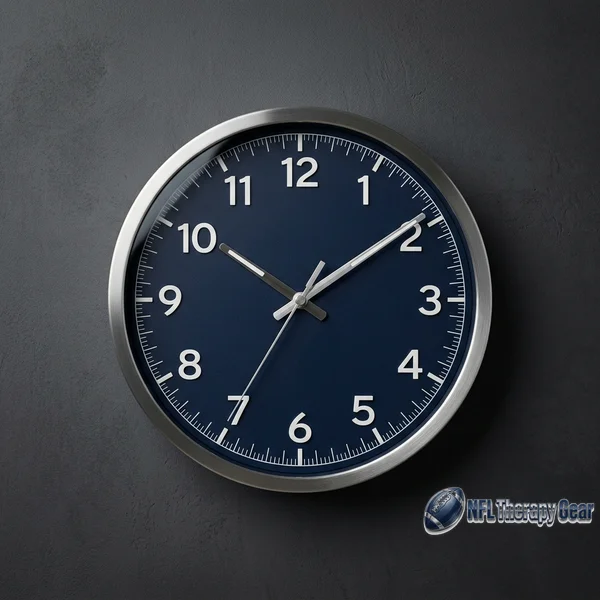
A wall clock occupies a unique position among home decorations — it is both functional object and decorative element, serving the practical purpose of time display while simultaneously contributing to the room’s visual character. An NFL team wall clock transforms this dual-purpose household essential into a constant expression of team allegiance, placing team identity on the wall surface most frequently glanced at throughout the day. Every time check becomes a micro-moment of team connection, accumulating into hundreds of brief team-identity encounters across a typical day.
The range of NFL wall clock designs extends from simple, affordable plastic models suitable for children’s rooms to premium crafted pieces with hardwood frames, glass lenses, and precision mechanisms that function as genuine decorative investments. Understanding the design categories, mechanism types, and quality indicators within this range helps fans select clocks that serve both their timekeeping needs and their decorative standards.
Clock Mechanism Types
Quartz Movement
Quartz battery-powered movements dominate the wall clock market, including team-themed models. These mechanisms use the natural oscillation frequency of a quartz crystal to regulate timekeeping with accuracy within a few seconds per month. The practical implications for fans are straightforward — a quartz-movement team clock requires only an annual battery replacement to maintain accurate timekeeping, with no winding, adjustment, or complex maintenance required.
The sweep versus tick distinction within quartz movements affects both aesthetics and noise. Ticking movements advance the second hand in one-second increments, creating the familiar tick sound with each advance. Sweep movements advance the second hand in a continuous smooth motion, producing minimal noise. For man caves, bedrooms, and offices where clock noise might be distracting during quiet moments, sweep movements provide silent operation that ticking mechanisms cannot match.
LED and Digital Displays
LED wall clocks replace the traditional dial face with illuminated digital time displays that add technological character to team-themed timekeeping. Team-colored LED digits — displaying time in the team’s primary or secondary color — create clocks that function as both timepieces and ambient lighting elements. The soft glow of LED displays adds atmospheric light to darkened game-viewing rooms, providing time visibility without requiring additional lighting to read a traditional dial.
Programmable LED displays can alternate between time display, date display, and temperature readings, adding informational utility beyond basic timekeeping. Some advanced models include programmable text displays that can show custom messages, game-day countdowns, or team slogans, transforming the clock from a passive time display into an active information and enthusiasm display.
Design Styles
Traditional Round Dial Clocks
The classic round wall clock format provides the most straightforward platform for team-themed timekeeping. Team logos positioned at the dial’s center, team colors applied to the dial background and hour markers, and team-specific typography on numerical displays create immediately recognizable team clocks within a format that every viewer understands at a glance.
Dial artwork ranges from simple logo-centered designs to elaborate illustrated compositions that cover the entire dial surface. Stadium panorama dials, historical team photography dials, and artistic interpretations of team identity create clocks that double as wall art pieces, providing visual interest that extends beyond the functional time display to offer decorative value comparable to framed prints of similar size.
Neon and Illuminated Clocks
Neon-style clocks — using either genuine glass neon tubes or LED neon-simulation lighting — surround the clock dial with a ring of colored light that creates the sports-bar atmosphere associated with classic neon signage. These illuminated clocks serve as both timepieces and decorative lighting fixtures, casting ambient team-colored light onto surrounding wall surfaces and providing the retro commercial aesthetic that neon lighting evokes.
Chrome housing, mirrored dial surfaces, and colored neon tubes combine to create clocks with significantly more visual presence than non-illuminated alternatives. The illumination draws attention to the clock as a decorative focal point, making neon clocks effective centerpieces for bar areas, entertainment rooms, and man caves where the sports-bar atmosphere justifies their bold visual presence.
Novelty and Themed Shapes
Shaped clocks — cut to helmet profiles, football shapes, jersey outlines, or stadium silhouettes — break from the traditional round format to create clocks that function primarily as decorative objects with timekeeping capability. These novelty shapes prioritize visual impact and team-themed character over the clean readability that traditional round dials provide, making them best suited for spaces where the clock’s decorative contribution outweighs its timekeeping function.
Helmet-shaped clocks replicate the team’s helmet design — including color scheme, stripe pattern, and facemask detail — while incorporating a clock dial into the helmet’s side panel. These dimensional clocks add sculptural presence to wall displays, projecting from the wall surface in ways that flat round clocks cannot, creating a more engaging visual element within the room’s decorative scheme.
Frame Materials and Quality
Frame material affects both the clock’s durability and its visual character. Plastic frames provide affordable, lightweight construction suitable for casual spaces and children’s rooms where the clock may be subject to impacts or where the lower cost allows more frequent replacement. Metal frames — chrome, brushed nickel, or painted steel — add weight and refinement that plastic cannot replicate, creating a more substantial presence appropriate for rooms where quality fixtures set the decorative standard.
Wooden frames represent the premium end of team clock construction. Hardwood frames in natural, stained, or painted finishes provide the warmth and craftsmanship character that distinguishes furniture-quality pieces from mass-produced accessories. Some premium team clocks use reclaimed or distressed wood frames that add vintage character, connecting the clock’s aesthetic to heritage and tradition in ways that complement vintage-themed sports decor.
Glass lens versus open-face design affects both the clock’s visual quality and its maintenance requirements. Glass-covered dials protect the dial surface and hands from dust, accidental contact, and environmental damage, maintaining the clock’s appearance with minimal maintenance. Open-face designs — where hands and dial are exposed without a covering lens — provide a more casual, accessible aesthetic but require periodic dust cleaning that glass-covered dials avoid.
Sizing and Placement
Wall clock sizing follows similar proportional guidelines as wall art — the clock should relate to the wall space and surrounding furniture in a way that feels proportionally correct. Twelve-to-fourteen-inch diameter clocks suit standard rooms with eight-to-nine-foot ceilings and average wall spacing. Eighteen-to-twenty-four-inch oversized clocks make bold statements appropriate for large walls, open-plan spaces, and dedicated sports rooms where the clock serves as a primary decorative element.
Placement height for wall clocks traditionally positions the dial center at eye level — approximately fifty-seven inches from the floor — providing comfortable viewing angles from both standing and seated positions. In dedicated viewing rooms where occupants are primarily seated, lower placement that aligns with seated eye level may improve readability.
Placement context affects clock selection. A neon clock that energizes a man cave bar area would overwhelm a quiet home office. A simple round dial clock appropriate for a hallway would feel underwhelming as the centerpiece of a dedicated sports room. Matching the clock’s visual intensity to its intended room’s energy level ensures that the timepiece complements rather than conflicts with the space’s purpose.
Multi-Clock and Time Zone Displays
Fans who follow teams in different time zones — a common situation for relocated fans who maintain allegiance to their hometown team while living in a new market — can use multiple clocks to display both local time and the team’s home-market time. A two-clock arrangement labeled with city names provides at-a-glance time awareness for scheduling game viewing around the fan’s local time commitments.
Sports bar-style multi-clock walls displaying times across major NFL market cities create dramatic decorative installations that combine functional timekeeping with team-culture atmosphere. Three to five clocks arranged horizontally, each labeled with a different NFL city (New York, Chicago, Denver, Los Angeles, Honolulu for example), create the same international-hotel lobby aesthetic adapted for football fandom contexts.
Vintage and Collectible Team Clocks
Vintage NFL wall clocks from past decades have developed collectible interest beyond their timekeeping function. Clocks produced during specific championship eras, featuring discontinued team logos, or manufactured by no-longer-operating clock companies carry historical significance that current production cannot replicate. These vintage pieces — found through antique shops, estate sales, and online collector markets — add authentic period character to team-themed rooms while connecting the space to the franchise’s visual history.
Condition assessment for vintage team clocks involves evaluating both the mechanism’s functional status and the dial’s visual condition. A vintage clock with a worn but visually appealing dial paired with a non-functioning mechanism can be retrofit with a modern quartz movement — preserving the vintage aesthetic while restoring reliable timekeeping. This restoration approach saves vintage clocks that would otherwise be relegated to non-functional display, converting them back into working timepieces with period-correct appearances.
Advertising and promotional team clocks — pieces originally produced as retail displays, bar promotions, or corporate gifts — represent a distinct collectible subcategory. These commercial pieces, never intended for consumer sale, carry exclusive character that standard retail clocks lack. Their larger sizes, robust commercial construction, and unique designs make them statement pieces that command attention in any collection.
DIY and Custom Clock Projects
Custom clock construction allows fans to create unique timepieces tailored to their specific vision. Clock kits — containing a quartz movement, hour and minute hands, and mounting hardware — transform virtually any flat surface into a clock. Fans have created team clocks from repurposed vinyl records, sections of stadium seating, license plates from the team’s home state, and custom-printed dial faces that incorporate personal photographs from memorable game-day experiences.
Epoxy resin clocks using team-colored pigments, embedded team memorabilia fragments (ticket stubs, trading cards, small collectibles), and clear-coat finishing create one-of-a-kind art clocks that cannot be purchased from any manufacturer. These handcrafted pieces carry personal significance beyond their team connection, representing creative investment that transforms a functional household item into a personal art project with enduring display value.
Game-Day Countdown Integration
Some advanced digital team clocks include countdown timer functionality that can be programmed to count down to the next game kickoff. This feature transforms the clock from a passive time display into an active anticipation builder — the shrinking countdown visible with every time check creates mounting excitement as game day approaches. Displaying “Days: Hours: Minutes to Kickoff” between regular time displays adds a football-calendar awareness to everyday timekeeping that standard clocks cannot provide.
Smart clocks connected to wireless internet can automatically update countdown targets by syncing with published NFL schedules, adjusting for schedule changes and providing accurate countdown information without manual programming. These connected clocks represent the intersection of traditional wall-clock decoration and modern smart-home technology, bringing data-connected functionality to a traditional decorative format.
Coordinating Clocks with Room Design
A team clock should integrate with its room’s overall design scheme rather than appearing as an isolated team element on an otherwise non-themed wall. Coordinating the clock’s frame finish with the room’s hardware finishes — matching chrome clock frames with chrome light fixtures, or matching wood clock frames with wood furniture tones — creates visual harmony between the clock and its surroundings. This coordination makes the clock feel like a planned design choice rather than a random addition, elevating its contribution to the room’s aesthetic from novelty to intentional design element.
Scale relationships between the clock and surrounding wall elements affect visual balance. A clock positioned within a gallery wall arrangement should relate proportionally to the other pieces in the collection. A clock displayed as a standalone wall element should be scaled to the wall’s size using the same proportional guidelines that govern wall art sizing — large enough to have presence without overwhelming the space.
Color coordination between the clock dial and the room’s color palette prevents the visual clash that occurs when intensely colored team clocks are placed in rooms with incompatible color schemes. Selecting clock designs that use subdued or accent-level team color application, rather than saturated full-dial team color, allows the clock to represent the team without conflicting with the room’s established palette. Alternatively, designing the room’s accent colors around the team clock’s palette integrates the clock as the room’s color-defining element rather than requiring the clock to adapt to pre-existing schemes.
Gift Potential
NFL wall clocks make effective gifts because they combine team identity with daily utility in a format that every home can accommodate. Unlike apparel (which requires size knowledge) or memorabilia (which requires display space assessment), a wall clock requires only a nail and a wall — resources available in virtually every living situation. The practical utility ensures the gift will be used rather than stored, providing daily team-identity connection that reminds the recipient of the gift-giver’s thoughtfulness.
Selecting a clock as a gift benefits from matching the design style to the recipient’s living environment. Premium neon or oversized clocks suit dedicated fan spaces, while understated round-dial clocks in quality frames suit offices, kitchens, and bedrooms where subtlety is preferred over bold team-themed visual intensity.
Maintenance and Battery Care
Wall clock maintenance is minimal but necessary. Annual battery replacement — using the battery type specified by the manufacturer — prevents the gradual timekeeping degradation that occurs as batteries drain. Replacing batteries before complete failure avoids the corrosion damage that leaking dead batteries cause to clock mechanisms — a common failure mode that preventive annual replacement eliminates.
Dust accumulation on clock dials, especially under glass lenses where static charge attracts particles, dulls the clock’s appearance over time. Periodic cleaning with a soft microfiber cloth restores dial clarity and maintains the clock’s visual contribution to the room’s decor. For glass-covered dials, glass cleaner applied to the cloth (never directly to the clock) prevents the spray from penetrating the glass seal and contacting the dial surface.
Wall mounting hardware should be appropriate for the clock’s weight and the wall material. Lightweight plastic clocks can hang from simple picture hooks or adhesive hangers on drywall. Heavier neon and wood-framed clocks require wall anchors or stud mounting to prevent the gradual anchor loosening that sustained weight causes in unsupported drywall, which can lead to eventual clock falls that damage both the clock and the wall surface.
Noise management remains an ongoing consideration for rooms where clock ticking might become intrusive during quiet activities. Bedroom clocks that tick noticeably can disrupt sleep onset for sensitive sleepers — the rhythmic sound that some find soothing proves maddening for others. Testing a clock’s noise level before permanent wall installation — by placing it on a nearby surface and spending quiet time in the room — prevents the frustration of mounting a clock only to discover its ticking is intolerable during the room’s quiet hours.
Office environments where team clocks serve dual decorative and professional purposes benefit from premium, understated designs that project team identity without creating the impression of prioritizing fandom over professional focus. A high-quality wooden-frame team clock with a refined dial design communicates sophisticated team appreciation that colleagues and clients can respect, while a novelty-shaped neon clock might undermine professional credibility despite its visual appeal in less formal contexts.
References:
- NFL.com — Official Fan Home Accessories Collection
- Interior Design Magazine — Wall Clock Placement and Room Design
- National Association of Watch and Clock Collectors — Clock Mechanism and Care Standards
- HGTV — Home Decor Accessory Placement Guidelines
- American Alliance of Museums — Display and Preservation Standards