A team jacket carries a different weight than a hoodie or t-shirt. It is outerwear — the visible layer that faces the world, the garment that defines a fan’s silhouette from across a parking lot or stadium concourse. The jacket says something about both team allegiance and personal style in a way that under-layer apparel does not, because it occupies the most prominent position in any cold-weather outfit. This visibility makes jacket selection one of the most consequential apparel decisions a fan makes.
NFL team jackets span an enormous range of styles, materials, and construction approaches. From lightweight windbreakers suitable for early-season tailgates to insulated parkas built for January playoff conditions, the category encompasses nearly every outerwear format that mainstream fashion and technical apparel industries have developed. Understanding the characteristics of each style helps fans match their jacket selection to their specific climate, activity level, and aesthetic preferences.
Jacket Style Categories
Varsity and Letterman Jackets
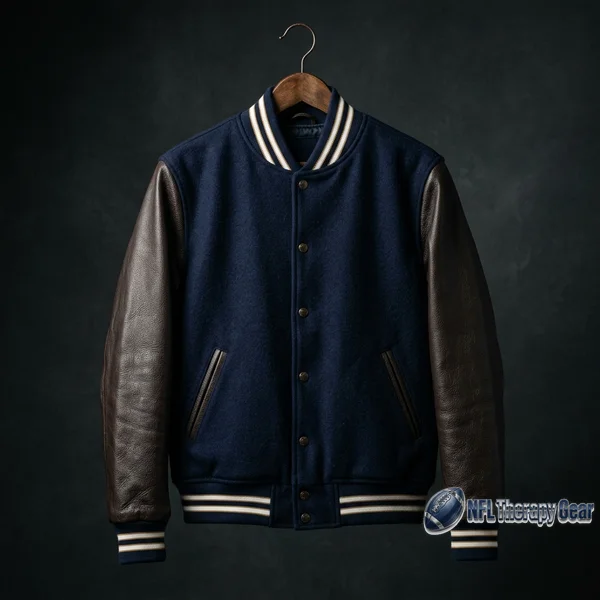
The varsity jacket — with its wool body, leather or synthetic leather sleeves, ribbed cuffs and collar, and snap-button front closure — is among the most iconic American outerwear formats. NFL team varsity jackets adapt this classic silhouette with team colors, logos, and typography, creating garments that combine athletic heritage aesthetics with professional team identity.
Construction quality in varsity jackets varies significantly across product tiers. Premium examples use genuine melton wool for the body — a dense, smooth-finished wool that provides excellent warmth and wind resistance while maintaining the structured silhouette characteristic of the format. The sleeves may use genuine leather, bonded leather, or polyurethane synthetic leather, each offering different balances of appearance, durability, and price. Quilted lining in the body and sleeves adds insulation and provides a smooth interior surface that facilitates easy on-and-off over layers beneath.
The weight of a well-constructed varsity jacket makes it a cold-weather garment by default. Melton wool and leather create a substantial package that provides meaningful warmth in temperatures from the thirties through the fifties Fahrenheit. Below that range, the jacket benefits from layering — a hoodie or thermal mid-layer beneath the varsity jacket extends its effective temperature range downward significantly.
Bomber Jackets
Bomber jackets — characterized by their gathered elastic waistband, ribbed cuffs, and front-zip closure — provide a more casual and contemporary alternative to the structured varsity format. NFL bomber jackets typically use nylon or polyester outer shells, which can be finished in satin, matte, or textured surfaces depending on the desired aesthetic.
The satin bomber — with its smooth, lustrous outer surface — creates a distinctly different impression than matte-finished alternatives. Satin surfaces showcase team colors with a richness and depth that matte fabrics cannot match, creating an eye-catching garment that reads as fashion-forward rather than purely athletic. This finish has strong historical associations with team sideline jackets from the 1980s and 1990s, giving satin bombers a retro appeal that resonates with fans who appreciate that era’s visual identity.
Insulation in bomber jackets ranges from unlined or thinly lined shells suitable for mild conditions to quilted synthetic-fill versions that handle genuine cold. The bomber format’s relatively compact silhouette limits the amount of insulation that can be incorporated without altering the jacket’s proportions, so heavily insulated bombers tend to appear puffier and less streamlined than their lighter counterparts.
Puffer and Quilted Jackets
Puffer jackets use compartmentalized insulation — natural down or synthetic fill enclosed within stitched baffles — to create a high-warmth-to-weight ratio. NFL puffer jackets bring team branding to a garment format engineered primarily for thermal performance, creating pieces that handle serious cold while maintaining visible team identity.
Down fill provides the highest warmth-to-weight ratio of any insulation material. Duck down or goose down traps body heat in the tiny air pockets created by the interlocking structure of down clusters, creating insulation that is lighter and more compressible than any synthetic alternative. Down-filled NFL jackets represent the premium insulation tier, offering warmth that makes extended outdoor exposure in frigid temperatures comfortable rather than merely tolerable.
Synthetic fill alternatives — polyester fibers engineered to approximate down’s lofting and insulating characteristics — offer advantages in wet conditions where natural down loses its effectiveness. Synthetic insulation maintains most of its thermal properties when damp, which matters for fans attending games in rain, sleet, or snow. The trade-off is slightly greater bulk and weight compared to equivalent-warmth down fill, though modern synthetic insulations have narrowed this gap considerably.
Softshell and Windbreaker Jackets
Softshell jackets use flexible, tightly woven fabrics that provide wind resistance and light water repellency without the rigid structure of hardshell waterproof jackets. NFL softshells serve as versatile transitional-weather pieces — warm enough for breezy autumn afternoons, water-resistant enough for light drizzle, and flexible enough for active use without the movement restriction of heavily insulated outerwear.
The fabric construction of softshell jackets typically involves a face fabric bonded to a membrane or fleece backing, creating a multi-layer textile that combines the best properties of its component layers. The face fabric provides abrasion resistance and weather protection, the membrane adds wind and water resistance, and the backing provides interior softness and additional insulation.
Windbreakers — the lightest jacket category — use unlined or mesh-lined nylon or polyester shells designed primarily for wind protection rather than warmth. NFL windbreakers are the most packable team jacket option, often folding small enough to fit in a backpack or cargo pocket when not in use. This portability makes them ideal for situations where weather conditions are uncertain — fans can bring a windbreaker to early-season games without committing to the bulk of heavier outerwear.
Material Performance Characteristics
The outer shell material of a jacket determines its weather protection, durability, and appearance. Several material categories appear commonly in NFL team jackets, each with distinct performance profiles.
Nylon outer shells offer excellent durability, wind resistance, and water repellency. The tight weave of nylon fabric blocks wind effectively, and applied DWR (durable water repellent) coatings cause light rain to bead and roll off the surface rather than soaking through. Nylon’s strength-to-weight ratio makes it the preferred shell material for lightweight jackets where packability matters.
Polyester shells provide similar wind and water performance to nylon with slightly different texture and drape characteristics. Polyester resists UV degradation better than nylon, which matters for jackets that spend significant time in direct sunlight during daytime games. The fabric also resists stretching and maintains its shape well through repeated wearing and washing cycles.
Wool — used primarily in varsity and overcoat formats — provides natural water resistance, excellent warmth, and a distinctive aesthetic that synthetic materials cannot precisely replicate. Wool fibers absorb moisture without feeling wet to the touch, providing comfort in damp conditions that would make synthetic-lined garments feel clammy. The material’s natural fire resistance and odor-management properties add functional benefits beyond its thermal and aesthetic qualities.
Weather Protection Features
Specific construction features enhance a jacket’s ability to protect against wind, rain, and cold beyond what the shell material alone provides. These features often distinguish mid-tier jackets from premium pieces that command higher price points.
Storm flaps behind front zippers prevent wind and rain from penetrating through the zipper teeth — a common weak point in jacket weather protection. Internal storm flaps create a fabric barrier behind the zipper, while external flaps cover the zipper from the outside. Premium jackets may include both internal and external storm flaps for maximum protection.
Adjustable features — drawcord hems, Velcro cuff adjusters, and removable hoods — allow wearers to customize the jacket’s fit in response to changing conditions. Cinching the hem and cuffs in windy conditions prevents cold air from entering at the jacket’s lower edge and wrist openings, dramatically improving warmth without adding insulation weight. These seemingly minor details significantly affect real-world comfort during extended outdoor exposure.
Sealed seams — where fabric joints are covered with waterproof tape — prevent water from seeping through stitch holes in the outer shell. Critically seam-sealed jackets tape only the most exposed seams (shoulders, hood), while fully seam-sealed jackets tape every seam in the garment. The distinction matters for fans who attend games in serious rain — critically sealed jackets handle drizzle and light rain, while fully sealed jackets provide protection suitable for sustained downpours.
Fit and Sizing Considerations
Jacket fit affects both appearance and functional performance. Unlike hoodies and sweatshirts, which are worn in relatively forgiving fit ranges, jackets must accommodate layering underneath while maintaining a proportioned silhouette when worn as the outermost garment.
Chest and shoulder measurements are the most critical fit dimensions for jackets. A jacket that fits correctly through the shoulders — with the shoulder seam sitting at or near the natural shoulder point — will generally look proportioned even if other dimensions are slightly loose or snug. Shoulders that are too narrow restrict arm movement and create visible pulling, while shoulders that are too wide make the jacket appear borrowed and ill-fitting.
Sleeve length should allow cuffs to reach the wrist bone when arms hang naturally at the sides, with enough additional length to prevent the sleeves from riding up above the wrist when arms are extended forward. Stadium activities — reaching for food and drinks, high-fiving neighboring fans, raising arms in celebration — require sleeve lengths that accommodate a full range of arm movements without exposing the wrists to cold air.
Body length varies between jacket styles and affects both appearance and practical coverage. Waist-length jackets (bombers, varsity) provide freedom of movement and a youthful silhouette. Hip-length jackets (many softshells and puffers) provide additional core coverage that significantly improves warmth. Thigh-length parkas provide maximum coverage but restrict movement and create a more formal visual impression that some fans find incompatible with casual game-day settings.
Styling and Context
NFL team jackets serve different social contexts depending on their style and presentation. A satin bomber with bold team graphics reads as emphatic team support — appropriate for game days, sports bars, and fan gatherings where visible allegiance is the point. A subtly branded softshell or a neutral-toned puffer with small embroidered logo serves dual duty as both team apparel and general-purpose outerwear, appropriate for workplace casual settings, weekend errands, and social occasions where overt team branding might feel out of place.
Layering under jackets creates opportunities for modular team representation. A team hoodie beneath a neutral jacket allows fans to reveal or conceal their team identity by zipping or unzipping the outer layer. This flexibility suits fans who move between different social contexts during game day — from a morning brunch where subtle is preferred to an afternoon tailgate where full team display is expected — without needing to change outfits entirely.
Color coordination between jacket, pants, footwear, and accessories affects the overall impression of a game-day outfit. Monochromatic approaches — matching the jacket’s team color with similarly toned bottoms and shoes — create a sleek, intentional look. Contrast approaches — pairing a bold team-color jacket with neutral bottoms — allow the jacket to serve as the outfit’s focal point. Both approaches work effectively; the key is intentionality rather than randomness in how colors are combined.
Travel and Storage
Fans who travel to away games face practical considerations about jacket portability. Puffer jackets with synthetic fill compress into remarkably small packages for their warmth level, making them efficient travel companions for road trips and flights. Some models include integrated stuff sacks or compress into their own interior pocket, creating a pillow-sized package that fits easily into a carry-on bag.
Down-filled jackets compress even more efficiently than synthetic alternatives, packing into extremely compact volumes relative to their expanded warmth. The compressibility of down makes it the preferred insulation for fans who travel frequently to cold-weather stadiums and need a serious warmth solution that does not consume excessive luggage space.
Varsity and wool jackets do not compress — their rigid materials require either wearing the jacket during travel or dedicating significant luggage space to accommodate their unfolded form. This portability limitation is worth considering for fans who plan to wear their team jacket at multiple away venues throughout a season and must account for travel logistics alongside aesthetic and performance preferences.
Off-season storage should maintain the jacket’s shape and material integrity. Hanging jackets on broad-shouldered hangers preserves shoulder structure better than folding, which can create permanent creases in wool and leather materials. Breathable garment bags protect against dust accumulation and moth damage while allowing air circulation that prevents moisture buildup and mildew development during months of storage between football seasons.
Care and Longevity
Jacket care requirements vary significantly by material and construction. Following material-specific care instructions preserves both the garment’s appearance and its functional performance — particularly weather protection features that degrade without proper maintenance.
DWR coatings require periodic reactivation to maintain their water-repelling effectiveness. Tumble drying on low heat reactivates existing DWR treatment by melting and redistributing the coating across the fabric surface. When the original DWR treatment is depleted — evidenced by water no longer beading on the fabric surface — spray-on or wash-in DWR treatments restore the water-repelling function.
Down-filled jackets require special laundering to prevent down clumping and loft loss. Gentle cycle washing with down-specific detergent (which preserves the natural oils in down clusters), followed by thorough low-heat tumble drying with clean tennis balls (which break up clumps and restore loft), maintains the insulation’s performance through multiple wash cycles. Air drying without mechanical agitation often leaves down insulation clumped and poorly distributed, reducing thermal performance until the down is properly relofted.
Leather-sleeved varsity jackets require conditioning to prevent drying and cracking. Leather conditioner applied periodically — typically two to three times per season — maintains the leather’s flexibility, color, and water resistance. Professional cleaning is recommended for heavily soiled or stained varsity jackets, as home laundering can damage both the wool body and leather sleeves if inappropriate cleaning agents or water temperatures are used.
Wool jacket bodies benefit from brushing with a garment brush after each wearing session to remove surface dust and lint. Spot cleaning with mild soap and water addresses localized stains without subjecting the entire garment to the stress of full laundering. Professional dry cleaning — recommended no more than once or twice per season to avoid over-processing the wool fibers — addresses accumulated soil and odors that brushing and spot cleaning cannot resolve.
Nylon and polyester shell jackets are the most laundering-friendly category, tolerating machine washing in cold water with mild detergent. Closing all zippers and fasteners before washing prevents the hardware from catching on other fabric surfaces and creating snags or abrasion damage. Hanging to dry rather than machine drying preserves DWR treatments and prevents heat-related shrinkage or adhesive degradation on taped seams and applied graphics.
Regular inspection of stress points — zipper attachments, snap fasteners, pocket stitching, and cuff ribbing — identifies developing wear before minor issues become major failures. Prompt repair of loose stitching, weakening snaps, or separating seams extends the jacket’s useful life significantly, and the cost of professional alterations is typically a fraction of replacement cost for premium team jackets.
References:
- NFL.com — Official Fan Outerwear and Apparel
- Textile World — Outerwear Materials and Manufacturing Technology
- AATCC — Textile Performance Testing Standards
- Cotton Incorporated — Natural Fiber Outerwear Research
- International Fabricare Institute — Garment Care and Cleaning Standards