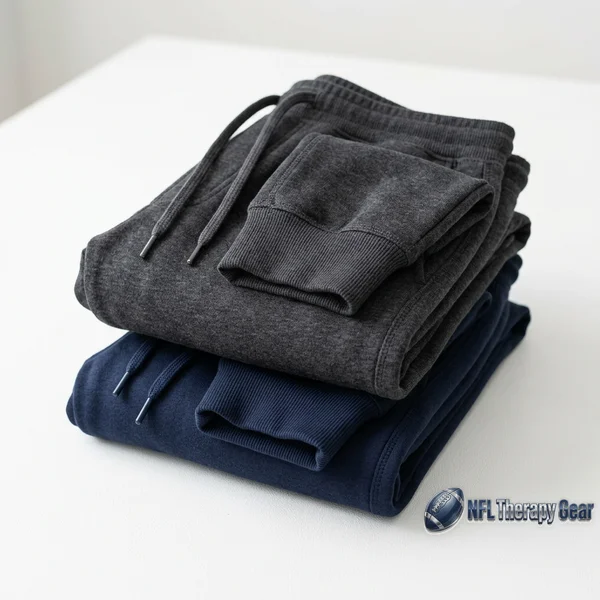
The distinction between sweatpants and joggers is largely one of silhouette and intention. Traditional sweatpants feature a straight or slightly tapered leg with an elastic waistband, prioritizing comfort and roominess above all else. Joggers — a newer evolution of the format — introduce a tapered leg that narrows from knee to ankle, typically finishing with an elasticized or ribbed cuff that creates a more structured, contemporary silhouette. Both formats serve as vehicles for team branding in the most comfortable segment of the fan apparel wardrobe.
NFL-branded sweatpants and joggers occupy the domain of game-day preparation and post-game relaxation, of lazy Sunday mornings before kickoff and comfortable Monday evenings reflecting on the weekend’s results. They are the garments fans reach for when comfort is the primary requirement and team identity is a welcome bonus. Understanding the construction, fit, and material differences within this category helps fans select pieces that deliver the specific combination of comfort, appearance, and durability they value.
Fabric Options and Performance
Fleece Sweatpants
Fleece-lined sweatpants represent the traditional standard for team-branded loungewear. The interior brushed surface provides warmth and softness against the skin, while the smooth exterior surface provides a clean base for printed or embroidered graphics. Fleece weight ranges from lightweight options suitable for indoor lounging and mild weather to heavyweight versions that provide genuine warmth during outdoor activities in cool conditions.
Cotton-blend fleece (typically eighty percent cotton, twenty percent polyester) offers the natural-fiber comfort that many wearers prefer for extended contact against skin. The cotton content provides breathability and moisture absorption, while the polyester component adds durability and helps the fabric maintain its shape through repeated stretching and washing. This blend represents the most common fabric composition for standard NFL sweatpants across all product tiers.
One-hundred-percent polyester fleece provides superior moisture management — wicking perspiration away from the skin rather than absorbing it — which matters for fans who wear team sweatpants during active pursuits like walking the dog, running errands, or exercising. The trade-off is a slightly less natural hand feel compared to cotton-blend alternatives, though modern polyester fleece fabrics have significantly narrowed this comfort gap through advanced fiber engineering and surface treatments.
French Terry
French terry sweatpants use the same loop-interior construction found in French terry hoodies and sweatshirts. The looped interior surface provides lighter insulation than brushed fleece, making French terry appropriate for warmer conditions and indoor environments where heavyweight fleece would be uncomfortably warm. The fabric’s lighter weight also creates a more fluid drape than fleece, resulting in a less bulky appearance that some fans prefer for casual outings where full-weight sweatpants might feel overly casual.
The breathability advantage of French terry stems from its open-loop structure, which allows air to circulate through the fabric more freely than the dense, matted surface of brushed fleece. This airflow management makes French terry sweatpants viable for spring and fall wearing when temperatures fluctuate between cool mornings and warmer afternoons, providing enough warmth for the cool periods without causing overheating as conditions warm.
Performance Fabrics
Performance joggers use technical fabrics — typically polyester blends with elastane for stretch — designed for athletic activity. These fabrics feature four-way stretch that accommodates a full range of movement, moisture-wicking properties that manage perspiration during exercise, and quick-dry characteristics that minimize the clammy post-workout feel common in cotton-based alternatives.
The styling of performance joggers often reflects athletic influence more overtly than traditional sweatpants. Contrast stitching, reflective details, ventilation panels, and articulated knee construction are common design features that signal athletic purpose while maintaining team branding through logo placement and team-color fabric selection.
Fit Profiles
Traditional Straight Leg
Straight-leg sweatpants maintain a consistent width from hip through ankle, creating a relaxed, classic silhouette that prioritizes maximum comfort and freedom of movement. This fit accommodates layering underneath — thermal leggings for extreme cold — without the restriction that tapered styles impose on layers below the knee. The straight-leg silhouette is unapologetically casual, and fans who choose it are prioritizing comfort over style refinement.
Tapered Jogger
Tapered joggers narrow progressively from the mid-thigh or knee to the ankle, creating a more contemporary, athletic silhouette. The taper reduces fabric volume around the lower leg, preventing the bunching and dragging that affects straight-leg sweatpants when they settle around the ankle. Ribbed or elasticized ankle cuffs secure the tapered leg above the shoe, creating a clean finish that works with both athletic footwear and casual shoes.
The tapered silhouette has transformed sweatpants from purely indoor loungewear into acceptable casual-public attire. Joggers styled with clean sneakers and a fitted hoodie or jacket create outfits that function in coffee shops, casual restaurants, and social gatherings where traditional straight-leg sweatpants would feel inappropriately sloppy. This style evolution has significantly expanded the contexts in which NFL-branded bottom-half apparel can be worn.
Loose and Relaxed Fit
Loose-fit sweatpants provide generous proportions throughout — wide legs, low-rise or mid-rise waistbands, and ample seat and thigh room. This fit serves fans who value maximum freedom and airflow above all other considerations. Loose-fit options are particularly popular for sleeping and home lounging, where body-contour concerns are irrelevant and unrestricted comfort is the sole objective.
Waistband and Closure Systems
Waistband construction affects both comfort and security. Elastic waistbands with internal drawstrings provide the most common combination — the elastic maintains position during normal wear, while the drawstring allows cinching for secure fit during movement and accommodates fluctuations in waist measurement throughout the day.
Wide elastic waistbands — two inches or more — distribute pressure more evenly than narrow bands, reducing the pinching and digging that causes discomfort during extended sitting. Some premium joggers feature knitted waistbands that function like ribbing, providing stretch and recovery without the rigid compression of conventional elastic. These ribbed waistbands mold to the body more naturally and maintain their shape better through repeated stretching than standard elastic alternatives.
Fly construction varies between styles. Traditional sweatpants often omit a functional fly entirely, relying on the elastic waistband for ease of dressing. Joggers designed for public wear frequently include functional zip or button flies that add convenience and visual structure, bringing the pants closer to conventional trouser design while maintaining the comfort advantages of elastic waistband construction.
Pocket Design
Pocket configuration on NFL sweatpants and joggers ranges from minimal to comprehensive. Side-seam pockets — open-top pockets set into the pants’ side seams — provide basic storage for hands, phones, and small items. The depth and width of side-seam pockets determine their practical utility; shallow pockets that cannot secure a modern smartphone fail the basic functionality test that most wearers apply.
Zippered pockets — either replacing or supplementing standard side-seam pockets — provide secure storage that prevents items from falling out during movement and reclining. This security feature is particularly valuable for fans wearing joggers during active outdoor activities where loose items could be lost. The zipper closure also keeps pockets sealed during laundering, preventing foreign objects from entering the wash and protecting pocket contents from accidental inclusion in wash loads.
Back pockets, cargo pockets, and hidden internal pockets appear on some jogger designs, expanding storage options beyond the basic side-seam configuration. These additional pockets increase the joggers’ versatility for errand-running and outdoor activities where carrying small items without a bag or backpack is preferred.
Matching Sets and Coordinated Looks
NFL sweatpant and jogger purchases frequently occur as part of coordinated sets — matching the bottom with a hoodie or sweatshirt in the same fabric, color, and design collection. These matching sets create unified looks where the team branding and fabric treatment carry consistently from top to bottom.
The visual impact of a coordinated set differs significantly from mixed-and-matched team separates. A matching fleece set in team colors projects intentional outfit planning that random combinations of team-branded top and bottom cannot achieve. This coordinated approach reads as a deliberate style choice rather than a default comfort grab, elevating team loungewear from pajama-adjacent casualness to presentable casual attire.
Fabric consistency between set pieces matters for visual coherence. A hoodie and sweatpants from the same manufacturer and collection will share fabric weight, color shade, and texture characteristics that create visual harmony. Mixing pieces from different manufacturers or collections — even in ostensibly the same team color — often reveals subtle differences in shade, texture, or fabric weight that undermine the set’s coordinated appearance.
Seasonal and Activity Considerations
Lightweight joggers serve warm-weather game viewing comfortably, providing coverage without the thermal weight of fleece. Midweight fleece sweatpants handle the core football season from October through November, when indoor temperatures during home viewing may be supplemented by periodic outdoor exposure for errands or short walks. Heavyweight fleece options provide genuine warmth for fans who attend outdoor events during the coldest months of the season, including tailgates, outdoor viewing parties, and stadium games in cold-weather markets.
Sleep and recovery use extends the sweatpant wardrobe into the overnight hours. The soft interior surfaces of fleece and French terry provide comfortable sleeping garments, and many fans maintain dedicated sleep-designated team sweatpants separate from their daywear options. This separation preserves the daywear pair’s appearance while ensuring that sleep-designated garments can be worn without concern for graphic preservation or fabric appearance.
Travel and Transit Comfort
NFL joggers have become a staple of game-day travel for fans who drive, fly, or take public transportation to stadiums in other cities. The combination of comfort, warmth, and team identity display makes joggers ideal for long car rides, airport terminals, and transit systems where fans want to be comfortable while visibly representing their team en route to away games.
For air travel specifically, joggers offer advantages that jeans and other structured pants cannot match. The elastic waistband eliminates the discomfort of a belt pressing against the abdomen during extended sitting, the soft fabric prevents the chafing that stiff denim causes during hours of immobility, and the stretch construction accommodates the slight swelling of lower extremities that occurs during pressurized cabin flights. Team-branded joggers also serve as conversation starters in airport terminals and on flights, connecting fans with fellow supporters heading to the same destination.
Road trip comfort over multi-hour drives follows similar logic. The ability to shift positions freely without restriction, the warmth of fleece against air-conditioned vehicle interiors, and the quick-on-quick-off convenience of elastic waistband construction during rest stops all contribute to making joggers the preferred transit garment for serious road-trip fans who may spend five or more hours in a vehicle on game day.
Sizing and Inseam Considerations
Sweatpant and jogger sizing typically corresponds to waist measurement ranges (small through extra-extra-large and beyond), but inseam length — the measurement from crotch to hem — varies between manufacturers and can significantly affect both appearance and comfort. Fans with longer or shorter-than-average legs may find that standard inseam lengths produce unflattering proportions: too-short inseams create a high-water appearance, while too-long inseams bunch excessively at the ankle or drag on the ground.
Jogger cuffs mitigate some inseam concerns because the elasticized ankle gathering accommodates a range of leg lengths by bunching slightly above the ankle regardless of the total inseam measurement. This built-in length adjustment makes joggers more universally flattering across different leg lengths than open-bottom sweatpants, which require more precise length matching to avoid either dragging or excessive ankle exposure.
Rise — the measurement from waistband to crotch — affects both comfort and appearance. Mid-rise construction suits most body types and wearing contexts, providing secure waistband positioning without the abdominal compression of high-rise or the sag risk of low-rise designs. Fans who plan to wear their team joggers during active movement should pay particular attention to rise, as insufficient rise causes the waistband to slide down during bending and reaching.
Color and Design Strategy
NFL sweatpants and joggers are available in team colors, neutral tones, and combination designs that mix team-color accents with neutral bases. Selecting the right color approach depends on intended wearing contexts and personal comfort with visible team branding on lower-body garments.
Neutral-base options — black, charcoal gray, or heather gray — with small logo accents provide the most versatile option. These pieces function as standard casual pants that happen to carry team identification, suitable for errands, coffee runs, and casual social settings where full team-color saturation might feel excessive. The neutral base also coordinates easily with varied top-half garments, allowing the pants to serve with both team-branded and non-team tops.
Full team-color sweatpants make the boldest identity statement but limit styling versatility. Bright orange, electric blue, or vivid green pants demand careful coordination with the rest of the outfit to avoid visual overload. These pieces work best as part of coordinated sets where the matching hoodie creates an intentional monochromatic presentation, or with deliberately contrasting neutral tops that let the pants serve as the outfit’s focal color element.
Side stripe and panel details — contrasting color stripes or fabric panels running down the leg’s exterior — add visual interest and athletic styling cues that distinguish joggers from basic sweatpants. These details reference athletic warm-up pants, carrying associations with performance and training that elevate the garment’s perceived purpose beyond pure lounging. The stripe color typically corresponds to a secondary team color, creating an integrated team-identity presentation through design detail rather than explicit logo placement.
Care and Maintenance
Sweatpant and jogger care follows the same cold-water, gentle-cycle, air-dry principles that apply to hoodies and sweatshirts. The additional concern specific to bottoms is elastic waistband and cuff degradation — heat exposure during machine drying is the primary cause of elastic failure in sweatpants. Once elastic loses its recovery, the waistband and cuffs sag permanently, creating a sloppy fit that cannot be restored without replacing the elastic components entirely.
Pilling on fleece surfaces develops with wearing and washing but can be managed with regular fabric shaving. Attention to the inner thigh and seat areas — where friction is greatest — prevents pill accumulation that creates visual roughness and reduces the soft hand feel that makes fleece sweatpants comfortable. Periodic depilling with a battery-operated fabric shaver takes minutes and restores the surface to near-new smoothness.
Drawstring management during laundering prevents tangling and loss. Tying drawstring ends together or securing them with a small safety pin before washing keeps them from retreating into the waistband channel — a frustrating problem that requires threading tools to resolve once the drawstring has been pulled fully inside. Knotting the drawstring ends prevents the plastic or metal tip from pulling through the channel opening, providing a permanent solution to the disappearing-drawstring problem.
Odor management in sweatpants requires attention because the garment’s close contact with skin, combined with extended wearing sessions during game-day marathons, can produce odor retention that standard washing does not fully address. Adding a cup of white vinegar to the wash cycle’s rinse phase neutralizes odor-causing bacteria without the chemical residue left by scented laundry additives. For persistent odors, soaking the garment in a cold-water vinegar solution for thirty minutes before washing provides deeper deodorizing than the washing machine cycle alone can achieve.
References:
- NFL.com — Official Fan Loungewear and Apparel
- Cotton Incorporated — Fleece and Knit Fabric Research
- AATCC — Textile Performance Standards
- Textile World — Loungewear Manufacturing and Materials
- Fibre2Fashion — Apparel Design and Comfort Technology