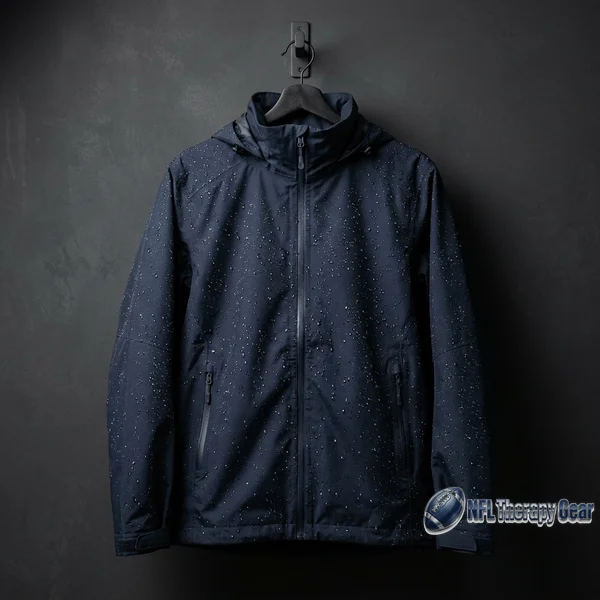
Rain does not cancel NFL games. When skies darken and precipitation begins falling on a stadium filled with sixty thousand fans, the difference between a miserable afternoon and a memorable one often comes down to weather protection — specifically, whether the fan has effective rain gear or sits exposed to conditions that transform clothing into cold, heavy, water-saturated weight against the body. NFL rain jackets and ponchos address this reality with team-branded weather protection designed for the specific demands of outdoor stadium attendance.
Understanding the technical aspects of rain protection — the distinction between water-resistant and waterproof, the role of seam construction, the balance between weather protection and breathability — helps fans select rain gear that actually works in the conditions they encounter rather than providing the illusion of protection that fails when genuinely tested by sustained rainfall.
Waterproof Versus Water-Resistant
The distinction between waterproof and water-resistant is not merely semantic — it represents a fundamental difference in protection capability that determines whether rain gear handles drizzle or downpour.
Water-resistant fabrics have been treated with a DWR (durable water repellent) coating that causes water to bead on the surface and roll off rather than soaking through. This treatment is effective against light rain, mist, and brief exposure to moderate rain, but sustained or heavy rainfall overwhelms the treatment’s capacity, eventually allowing water to penetrate the fabric. Water-resistant jackets protect against the first twenty to thirty minutes of moderate rain; beyond that threshold, protection diminishes progressively as the DWR treatment becomes saturated.
Waterproof fabrics incorporate a membrane or coating that physically blocks water penetration regardless of duration or intensity. Waterproof jackets maintain their protection through hours of heavy rain — the protection does not diminish with exposure time because the barrier is structural rather than surface-applied. This sustained protection comes at costs: waterproof fabrics are typically heavier, less breathable, and more expensive than water-resistant alternatives, and their construction requires sealed seams that add manufacturing complexity and cost.
For NFL game attendance, the choice between water-resistant and waterproof depends on the fan’s willingness to gamble on weather intensity. Water-resistant jackets are lighter, more comfortable, and more affordable for the majority of rainy games that involve light to moderate precipitation. Waterproof jackets provide insurance against the worst-case scenario — a sustained downpour during a three-hour game — that water-resistant options cannot handle. Fans in markets with frequent heavy rainfall (Seattle, Jacksonville, Miami during storm season) benefit more from waterproof investment than fans in markets where rain tends toward lighter intensity.
Fabric Technologies
Membrane-Based Waterproofing
Membrane waterproofing uses a thin, microporous film laminated to the jacket’s outer fabric. The membrane’s pores are small enough to block liquid water droplets but large enough to allow water vapor (perspiration) to pass through, creating a breathable waterproof barrier. This breathability prevents the internal condensation buildup that occurs inside non-breathable waterproof garments, where trapped body moisture creates a clammy, uncomfortable interior environment that can be nearly as wet as rain penetration from outside.
The breathability rating of membrane fabrics — measured in grams of moisture vapor transmitted per square meter per twenty-four hours — indicates how effectively the membrane handles perspiration. Higher breathability ratings provide greater comfort during active use, while lower ratings suffice for sedentary activities like seated game viewing. Stadium attendance, which alternates between seated stillness and walking activity, requires moderate breathability that handles brief movement periods without the excessive perspiration buildup that low-breathability fabrics produce.
Coated Waterproofing
Coated waterproof fabrics apply a polyurethane or similar waterproof coating directly to the fabric’s interior surface. This approach is less expensive than membrane lamination and provides effective waterproofing, but typically with reduced breathability compared to membrane alternatives. The coating creates a continuous barrier that blocks both water entry and moisture vapor exit, creating the condensation tendency that membranes are designed to avoid.
Ventilation features — underarm zippers, back vents, or mesh-lined pit zips — compensate for coated fabrics’ lower breathability by providing mechanical airflow channels that release trapped body moisture. These ventilation features allow fans to manage internal climate by opening vents during movement and closing them during seated periods, providing manual control over the moisture balance that membrane fabrics manage automatically.
DWR (Durable Water Repellent) Treatments
DWR treatments are applied to the outer fabric surface of both waterproof and water-resistant jackets. On waterproof jackets, the DWR prevents the outer fabric from absorbing water — a phenomenon called wetting out — that does not compromise waterproofing but adds weight, reduces breathability, and makes the jacket feel cold and clammy from the outside. On water-resistant jackets, the DWR is the primary protection mechanism, and its effectiveness determines the garment’s rain performance.
DWR treatments degrade over time through exposure to dirt, body oils, detergent residue, and mechanical abrasion. This degradation is reversible — tumble drying on low heat reactivates existing DWR, and spray-on DWR products restore the treatment when the original application is depleted. Regular DWR maintenance is essential for both waterproof and water-resistant jackets, as a jacket with depleted DWR performs significantly worse than its specification would suggest.
Construction Features
Seam construction determines whether a waterproof fabric’s protection extends to the entire garment or leaves vulnerabilities at every stitch line. Unprocessed seams create needle holes that allow water to penetrate regardless of the fabric’s waterproof capability — a jacket can use the most waterproof fabric available and still leak at every seam if the stitching is not sealed.
Seam taping — applying waterproof tape over sewn seams on the garment’s interior — seals these needle holes. Fully seam-taped jackets seal every seam in the garment, providing comprehensive waterproofing with no vulnerable points. Critically seam-taped jackets seal only the most exposed seams (shoulders, hood, upper body), leaving less-exposed seams untreated to reduce cost. The distinction matters in sustained heavy rain — critically taped jackets may eventually leak at untreated seams under prolonged downpour conditions.
Hood design significantly affects rain protection effectiveness. A well-designed hood fits snugly around the face without obstructing peripheral vision, adjusts to accommodate varying head sizes and headwear beneath it, and extends far enough forward to shield the face from rain driven at angles by stadium wind. Stiffened hood brims — with integrated wire or plastic stays — maintain their shape against wind and rain rather than collapsing against the face, providing sustained protection without constant manual adjustment.
NFL Ponchos
Ponchos — single-piece waterproof or water-resistant coverings that drape over the body without sleeves — provide the simplest, most packable form of rain protection. NFL team ponchos combine basic rain coverage with team identity display, typically featuring team logos and colors printed on the poncho’s front surface.
Disposable Ponchos
Disposable ponchos — thin polyethylene sheets with head openings and optional hood formations — provide emergency rain protection at minimal cost and weight. These single-use or limited-use items fold to pocket size, making them practical insurance policies that fans can carry to every outdoor game without committing to the bulk or expense of a proper rain jacket. Team-branded disposable ponchos add fan identity to this basic utility, creating rain protection that displays allegiance rather than generic emergency gear aesthetics.
The protection level of disposable ponchos is limited but meaningful. They block direct rain contact with the upper body and, if long enough, the upper legs. They do not protect arms effectively (due to the open-side design), they provide no wind protection, and they do not breathe — creating the interior moisture buildup common to all non-breathable waterproof garments. For brief rain events during otherwise dry games, disposable ponchos provide adequate protection. For sustained rain, they supplement but do not replace proper rain gear.
Reusable Stadium Ponchos
Reusable team ponchos use heavier-weight waterproof fabric — typically vinyl or coated nylon — that provides more durable protection than disposable alternatives. These ponchos fold into integrated pouches or stuff sacks, creating compact packages that fit in backpacks or seat-back pockets without occupying the space a full rain jacket would require.
The coverage area of stadium ponchos typically extends below knee level when standing and drapes over the seat when sitting, protecting both the fan and the seat surface from rain accumulation. This seating coverage represents an advantage over rain jackets, which protect the body but leave the seat surface exposed to rain that soaks through pants upon sitting.
Packability and Portability
The best rain protection is the rain protection actually present when rain occurs. A premium waterproof jacket left at home because the forecast called for clear skies provides zero protection when an unexpected storm develops. Packable rain gear that travels easily to every outdoor game — regardless of forecast — ensures that protection is available when conditions change.
Packable rain jackets compress into their own pockets, integrated stuff sacks, or compact pouches small enough to fit in a cargo pocket, backpack, or seat cushion compartment. The packed size varies with the jacket’s fabric weight and feature complexity — minimalist shells pack smaller than feature-rich jackets with multiple pockets, hood adjustments, and ventilation systems.
Weight considerations for portability favor lighter constructions. A ten-ounce rain jacket carried in a backpack adds negligible burden to game-day gear, while a twenty-ounce insulated waterproof jacket represents a more significant carrying commitment. Fans who attend games in markets where rain is possible but not certain benefit from lightweight, packable options that can be carried routinely without the weight penalty that discourages consistent carrying of heavier alternatives.
Stadium Policies and Clear Bag Rules
NFL stadium security policies restrict the size and type of bags that fans can bring into venues, which affects how rain gear is transported into the stadium. Clear bag policies limit carried items to approved transparent bags and small clutch purses, meaning that packable rain jackets must either fit within these bag dimensions or be worn into the stadium. Understanding the specific stadium’s policy before game day prevents the frustration of being denied entry with rain gear that exceeds the permitted bag dimensions.
Some stadiums permit rain ponchos as separate items outside the clear bag restriction, recognizing that weather protection should not be penalized by security policies designed for other purposes. Checking the specific venue’s policy regarding rain gear exceptions before attending helps fans plan their rain protection strategy within the venue’s requirements.
Market-Specific Rain Gear Recommendations
NFL markets experience dramatically different precipitation patterns that influence optimal rain gear selection. Pacific Northwest markets like Seattle experience frequent light-to-moderate rainfall that rarely becomes torrential but persists throughout games — conditions where breathable water-resistant jackets provide sufficient protection without the bulk and cost of heavy waterproof construction.
Gulf Coast and Southeast markets (Jacksonville, Miami, Tampa Bay, New Orleans) face sudden, intense tropical rainfall that can deliver heavy downpours of short duration. These storms drop significant water volume in concentrated periods, overwhelming water-resistant treatments quickly. Waterproof jackets or substantial ponchos that handle heavy rain intensity, even for relatively brief periods, serve these markets better than lighter water-resistant alternatives designed for persistent drizzle.
Northeast and Midwest markets (Buffalo, Green Bay, Chicago, New England) face cold rain during late-season games — a combination that creates the most uncomfortable conditions fans can encounter. Cold rain chills exposed skin rapidly and saturates unprotected clothing, creating hypothermia-risk conditions during extended exposure. Insulated waterproof jackets that provide both thermal protection and rain exclusion serve these markets during the critical November-through-January period when cold rain transitions toward sleet and wet snow.
Dome and retractable-roof stadiums eliminate rain concerns during games but not during tailgating, parking lot walks, and post-game exposure. Fans attending indoor games should consider pre-game and post-game rain exposure when deciding whether to carry rain protection, as the walk from parking to venue and back may involve significant outdoor exposure regardless of the playing conditions inside.
Wet Weather Game-Day Strategy
Effective rain preparation extends beyond outerwear to encompass a comprehensive approach to wet-weather game attendance. Waterproof footwear or waterproof shoe covers protect feet from standing water and rain splash. Waterproof phone cases protect electronics that fans use throughout games. Sealed plastic bags protect wallets, tickets, and other personal items from water damage.
Layering beneath rain gear should account for the reduced breathability of waterproof garments. Moisture-wicking base layers transport perspiration away from skin even when the outer layer cannot fully ventilate. Avoiding cotton as a rain-day base layer is particularly important — cotton absorbs moisture and holds it against the skin, creating chilling that compounds rain-exposure discomfort. Synthetic or wool base layers that maintain warmth when damp provide significantly better comfort under waterproof rain shells.
Post-game garment care after rain exposure involves prompt drying to prevent mildew development. Hanging rain jackets open to air dry, wiping down poncho surfaces, and allowing all rain gear to dry completely before storage prevents the musty odors and mold growth that develop when wet waterproof materials are stored folded or compressed while still damp.
Maintenance and Longevity
Rain gear maintenance focuses on preserving waterproofing effectiveness through regular cleaning and DWR reactivation. Dirty rain jackets perform worse than clean ones because surface contamination interferes with DWR function and can block membrane pores that provide breathability. Washing rain gear with technical fabric wash — formulated to clean without leaving residue that impairs DWR — followed by low-heat tumble drying to reactivate DWR treatment restores performance that accumulated dirt and use have degraded.
Zipper maintenance with zipper lubricant prevents the binding and corrosion that develop when metal or coil zippers are exposed to repeated rain and inadequate drying. A few drops of zipper-specific lubricant applied periodically maintain smooth operation and prevent the zipper failures that can render a rain jacket unusable mid-game.
Storage between uses should maintain the garment’s shape and membrane integrity. Hanging rain jackets on wide-shouldered hangers rather than compressing them into packed storage between games preserves the membrane’s structure and prevents permanent creasing that can compromise waterproof performance at fold lines. The packed configuration is ideal for transport but not for extended storage between game days.
DWR reapplication frequency depends on use intensity and washing frequency. Fans who attend multiple outdoor games per season in rain-prone markets may need to reapply DWR treatment twice per season to maintain optimal water-beading performance. Spray-on DWR products designed for outerwear provide the most straightforward reapplication method — spray evenly across the clean, dry fabric surface, then activate with low-heat tumble drying for twenty minutes. Wash-in DWR products offer an alternative application method for fans who prefer incorporating DWR reapplication into their regular laundering routine.
Membrane longevity depends on avoiding substances that clog the micropores responsible for breathability. Body oils, sunscreen residue, insect repellent, and laundry detergent residue can all block membrane pores over time, reducing breathability without visibly affecting the jacket’s exterior appearance. Using technical fabric wash formulated to clean without leaving pore-blocking residue — rather than standard laundry detergent — preserves the membrane’s breathability through years of regular use and maintenance.
References:
- NFL.com — Official Fan Weather Protection Apparel
- AATCC — Waterproofing and Water Resistance Testing Standards
- Textile World — Waterproof Fabric Technology
- Cotton Incorporated — Weather Protection Textile Research
- National Weather Service — Outdoor Weather Safety Guidelines