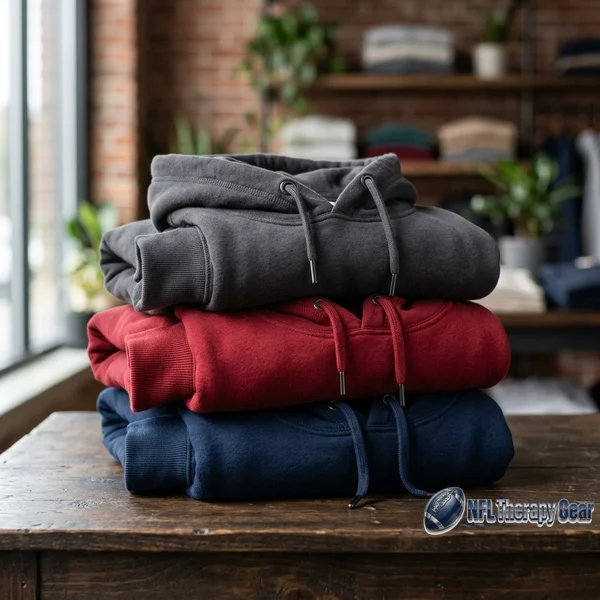
When the temperature drops and the season enters its most consequential stretch, the hoodie becomes the uniform of the committed fan. It is the garment that bridges the gap between casual comfort and visible team allegiance — warm enough for November stadium seats, comfortable enough for Sunday couch sessions, and emblazoned with enough team identity to leave no doubt about where loyalties lie. NFL hoodies and sweatshirts represent the largest single category of team-branded cold weather apparel, and their range of styles, materials, and construction quality spans from budget basics to premium performance pieces.
Understanding what distinguishes one NFL hoodie from another requires looking beyond the logo on the chest. Fabric composition, construction techniques, fit profiles, and finishing details all contribute to how a sweatshirt performs, how long it lasts, and how it feels against the skin on a cold Sunday afternoon. This knowledge helps fans choose garments that match their specific needs — whether those needs center on stadium warmth, everyday casual wear, or workout functionality.
Fabric Types and Their Properties
The fabric used in NFL hoodies falls into several categories, each offering different combinations of warmth, softness, durability, and moisture management. Understanding these fabric types is the most reliable way to predict how a particular sweatshirt will perform in real-world wearing conditions.
Fleece
Fleece remains the dominant fabric category for NFL hoodies and sweatshirts. The term covers a range of knitted fabrics whose common characteristic is a brushed interior surface that creates a soft, insulating layer against the skin. Standard fleece — sometimes called midweight fleece — provides moderate warmth suitable for temperatures from the mid-forties through the low sixties Fahrenheit, making it appropriate for the majority of the NFL regular season in most markets.
The weight of fleece fabric is typically measured in ounces per square yard or grams per square meter. Lightweight fleece (around seven to eight ounces per square yard) offers layering versatility without bulk, while heavyweight fleece (eleven ounces or more) provides standalone warmth sufficient for colder conditions. The weight designation directly affects both thermal performance and the garment’s physical bulk when worn or packed.
Fleece composition varies between products. Cotton-dominant fleece blends (typically eighty percent cotton, twenty percent polyester) offer natural fiber softness and breathability. Polyester-dominant blends or one-hundred-percent polyester fleece provides superior moisture-wicking capability and faster drying time, making it more suitable for active wear or conditions where perspiration management matters. Some premium fleece fabrics use specialized fiber treatments — such as pill-resistant finishes or antimicrobial coatings — that enhance long-term appearance and freshness.
French Terry
French terry is a knitted fabric characterized by loops on its interior surface rather than the brushed nap of standard fleece. This loop construction creates a lighter, more breathable fabric that performs well in transitional weather — cool enough for early fall but not heavy enough for deep winter. NFL sweatshirts in French terry tend to have a more refined, less bulky silhouette than their fleece counterparts, making them appropriate for casual social settings where a full fleece hoodie might feel overly casual.
The drape of French terry differs noticeably from fleece. Where fleece tends to hold its shape rigidly, French terry moves more fluidly, following the body’s contours with a softer fall. This characteristic makes French terry hoodies feel less structured and more relaxed when worn, which some fans prefer for comfort-focused wear while others find less suitable for the put-together look they want from team apparel.
Performance Fabrics
Performance-oriented NFL hoodies use technical fabric blends designed for athletic activity. These fabrics incorporate moisture-wicking fibers that transport perspiration away from the skin surface, four-way stretch materials that accommodate a full range of movement, and lightweight insulation systems that provide warmth without the bulk and weight of traditional fleece.
Therma-style fabrics — proprietary blends offered by major athletic apparel manufacturers — use engineered fiber structures that trap body heat while remaining breathable enough to prevent overheating during moderate activity. These performance fabrics are typically found in the premium tier of NFL apparel, where they justify higher price points through superior functional characteristics that casual fleece cannot match.
Construction Quality Indicators
Beyond fabric selection, construction quality determines how well an NFL hoodie withstands repeated wearing and laundering. Several specific construction details serve as reliable indicators of overall garment quality.
Seam construction reveals manufacturing priorities. Double-stitched seams — where two parallel lines of stitching secure each seam — provide significantly greater durability than single-stitch construction. Flatlock seams, which lie flat against the skin rather than creating raised ridges, improve comfort during extended wear and reduce the abrasion that causes skin irritation under backpack straps or seat belts.
Ribbing at cuffs, hem, and neckline serves both functional and aesthetic purposes. Well-constructed ribbing uses tight-gauge knitting that maintains its elasticity through repeated stretching and washing. Poor-quality ribbing stretches out quickly, causing cuffs to flare and hems to lose their fit — a visible deterioration that makes an otherwise intact garment look worn and neglected. The width and weight of ribbing also affect appearance: wider, heavier ribbing creates a more substantial finished edge, while narrow ribbing produces a cleaner, more modern profile.
Zipper quality matters significantly for full-zip hoodies. Metal zippers with auto-locking sliders provide smoother operation and greater durability than plastic alternatives. Zipper tape — the fabric strip on either side of the zipper teeth — should be securely stitched to the garment body with reinforced stitching at the top and bottom stops, where mechanical stress is greatest. A poorly installed or low-quality zipper will fail long before the rest of the garment shows significant wear.
Hood construction encompasses several details that affect both appearance and function. A three-panel hood (cut from three separate fabric pieces) conforms to the head more naturally than a two-panel construction, creating a more flattering and functional shape when worn up. Drawstring quality, grommet reinforcement at drawstring holes, and the hood’s attachment to the neckline all contribute to how the hood performs when deployed in wind or rain.
Fit Profiles and Sizing
NFL hoodies are available in several fit profiles that accommodate different body types and style preferences. Understanding these fit categories helps fans select garments that look and feel the way they intend.
Classic fit — the most common profile for team-branded hoodies — provides a relaxed silhouette with room through the chest, midsection, and arms. This fit accommodates layering underneath (thermal base layers, long-sleeve shirts) and provides the comfortable, unstructured feel that most fans associate with sweatshirt wearing. Classic-fit garments typically run true to standard sizing charts, though some manufacturers cut slightly larger to enhance the relaxed impression.
Athletic fit hoodies offer a more tapered silhouette that follows the body’s contours more closely without being restrictive. The chest and shoulders are proportional to standard sizing, but the midsection tapers inward, and sleeve lengths may be slightly longer to accommodate athletic arm positions. This fit works well for fans who want team apparel that looks intentional and well-fitted rather than oversized and casual.
Oversized or boyfriend-fit hoodies deliberately exceed standard proportions, creating an intentionally loose, enveloping silhouette. This fit trend has gained significant popularity in recent years, particularly among younger fans who prefer the relaxed aesthetic of garments that hang loosely from the shoulders and extend below the waist. Sizing for oversized fits often requires ordering the wearer’s standard size rather than sizing up, as the excess volume is built into the garment’s design rather than achieved through size inflation.
Logo Application Methods
The method used to apply team logos and branding to NFL hoodies significantly affects both the garment’s appearance and its durability through repeated washing. Several application methods are used across different product tiers.
Screen printing applies ink directly to the fabric surface through a mesh stencil. This method produces clean, precise graphics with unlimited color options and is the most cost-effective application method for large production runs. Screen-printed graphics sit on the fabric surface rather than penetrating it, which means they are subject to cracking and fading over time — a deterioration process accelerated by high-heat drying and harsh detergent use.
Embroidered logos use thread stitched directly into the fabric, creating dimensional, textured graphics that are substantially more durable than screen printing. Embroidery resists the cracking and fading that affects printed graphics, maintaining its appearance through hundreds of wash cycles. The dimensional quality of embroidered logos also creates a more premium visual impression, which is why embroidery is typically found on higher-tier NFL apparel products.
Appliqué construction involves cutting logo shapes from separate fabric pieces and stitching them onto the garment body. This technique produces bold, layered graphics with strong visual impact and excellent durability. Multi-layer appliqué — where different colored fabric pieces are stacked and stitched to create complex logo designs — represents one of the most visually striking and durable application methods available, though it adds both production complexity and garment weight.
Heat-transfer graphics use pre-printed vinyl or polyurethane film applied to the garment surface under heat and pressure. Modern heat-transfer technology produces smooth, flexible graphics that resist cracking more effectively than traditional screen printing, though the application’s bond to the fabric surface can weaken over time if subjected to repeated high-temperature laundering or dry cleaning.
Layering Strategy for Stadium Wear
Wearing an NFL hoodie to an outdoor stadium game in cold weather requires thinking about the garment as one component within a layering system rather than as a standalone cold-weather solution. Effective layering manages both warmth and moisture, maintaining comfort through the temperature fluctuations that occur during multi-hour outdoor events.
The base layer — worn directly against the skin beneath the hoodie — should be a moisture-wicking material that transports perspiration away from the body surface. Cotton base layers absorb and retain moisture, which creates a clammy, chilling effect as the moisture cools. Synthetic or merino wool base layers move moisture to their outer surface for evaporation, keeping the skin drier and warmer throughout the event.
The hoodie serves as the insulating mid-layer, trapping body heat in the air pockets within its fleece or terry construction. The hoodie’s effectiveness as an insulator depends on its fabric weight and the amount of dead air space it creates — thicker, loftier fabrics trap more air and provide more warmth, while thinner, denser fabrics offer less insulation but work better as layering pieces beneath outer shells.
An outer shell — a windproof or waterproof jacket worn over the hoodie — protects the insulating layer from wind and precipitation that would otherwise compromise its thermal performance. Wind drives cold air through fleece fabric, dramatically reducing its effective warmth, and moisture saturation collapses the air pockets that provide insulation. A simple wind-blocking shell over a quality hoodie can feel substantially warmer than the hoodie alone in windy conditions.
Seasonal Considerations and Use Cases
NFL hoodies serve different functions across the calendar year, and selecting appropriate weight and fabric for each season maximizes comfort and utility. Early-season games in September and early October, when temperatures in many NFL markets remain mild, call for lightweight French terry or thin fleece hoodies that provide team identity display without excessive warmth. These lighter pieces also transition smoothly into indoor settings — restaurants, bars, and home viewing parties — where heavier garments would be uncomfortably warm.
Mid-season games from late October through November represent the sweet spot for standard midweight fleece hoodies. Temperatures in northern markets drop into the forties and fifties, creating conditions where a well-constructed fleece hoodie provides comfortable warmth as either a standalone outer layer or the primary insulating piece in a two-layer system. This is the period when hoodies see their heaviest use and when their construction quality is most thoroughly tested by repeated wearing and washing cycles.
Late-season and playoff games in December and January push beyond what most hoodies can handle as standalone garments. Temperatures in cold-weather markets can plunge into the teens and single digits, requiring heavyweight fleece hoodies layered beneath insulated outerwear. Some fans prefer to reserve their thickest, warmest hoodies specifically for these extreme-cold occasions, maintaining lighter options for more moderate conditions throughout the rest of the season.
Off-season use extends the hoodie’s utility beyond game days. Training camp visits, draft day watch parties, free agency period celebrations, and casual year-round wear keep team hoodies in rotation across all twelve months. The versatility of the hoodie format — casual enough for errands, presentable enough for relaxed social settings, and comfortable enough for all-day wear — makes it perhaps the most frequently worn category of team-branded apparel in most fans’ wardrobes.
Color Selection and Team Identity
NFL hoodies are typically available in each team’s primary and secondary colors, plus neutral options (heather gray, black, white) that provide subtler expressions of team allegiance. Color selection affects both the garment’s visual impact and its practical versatility within a broader wardrobe.
Primary team colors make the strongest identity statements but may limit styling versatility. A bright orange or electric blue hoodie pairs well with neutral bottoms but can clash with other colored garments in a casual outfit. Fans who plan to wear their hoodie frequently with varied outfits may find neutral-base hoodies with colored logo accents more versatile than fully saturated team-color pieces.
Heather and marled fabric treatments create visual depth by blending colored fibers with gray or neutral fibers throughout the fabric. A heathered team-color hoodie reads as team-affiliated at close range while appearing more subtle and refined at a distance than a solid-color equivalent. This subdued approach appeals to fans who want to maintain team connection in professional or semi-formal casual settings where a solid team-color hoodie might feel too loud.
Care and Maintenance
Proper care extends the life and appearance of NFL hoodies significantly. Laundering practices, drying methods, and storage habits all affect how well a garment maintains its shape, color, and graphic integrity over time.
Washing in cold water preserves both fabric color and graphic application integrity. Hot water accelerates color fading, weakens elastic fibers in ribbing, and softens the adhesive bonds that secure heat-transfer and screen-printed graphics. Turning the garment inside out before washing protects the printed or embroidered surface from abrasion against other items in the wash load.
Air drying is the single most impactful care practice for hoodie longevity. Machine dryer heat degrades elastic fibers, accelerates graphic deterioration, and causes fleece fabrics to pill more rapidly than air drying. Laying the garment flat on a drying rack preserves its shape better than hanging, which can stretch the shoulders and create hanger dimples that are difficult to remove once established.
Pilling — the formation of small fiber balls on fleece surfaces — is a natural result of friction during wear and washing. Pill-resistant fabric treatments delay onset, but all fleece will eventually develop some pilling with regular use. A fabric shaver or sweater stone removes pills without damaging the underlying fabric, restoring a clean surface appearance. Regular depilling maintenance keeps fleece garments looking fresh through seasons of wear that would otherwise leave them looking tired and neglected.
Storage during the off-season should protect garments from dust, moisture, and moth damage while avoiding compression that permanently flattens fleece pile. Folded storage in clean, dry spaces — drawers, shelf compartments, or breathable garment bags — maintains fabric loft better than long-term hanging, which can stretch shoulder seams and distort the garment’s intended drape.
References:
- NFL.com — Official Fan Gear and Apparel Information
- AATCC (American Association of Textile Chemists and Colorists) — Textile Testing and Performance Standards
- Cotton Incorporated — Fabric Composition and Care Research
- Textile World — Apparel Manufacturing and Material Technology
- Fibre2Fashion — Textile Industry Standards and Garment Construction