The right bag transforms game-day logistics from a frustrating exercise in pocket-stuffing and hand-juggling into a streamlined carrying experience where essentials are organized, accessible, and secure. For NFL fans, team-branded bags serve this functional purpose while simultaneously displaying team identity in one of the most publicly visible accessory categories — a bag carried through parking lots, concourses, and stadium seating areas where thousands of fellow fans observe and recognize team allegiance through carried merchandise.
NFL bag options encompass backpacks for comprehensive daily and game-day carrying, stadium-approved clear bags for venue entry, sling and crossbody bags for hands-free convenience, drawstring bags for lightweight portability, and messenger bags for professional-casual carrying contexts. Understanding the functional characteristics, material qualities, and — critically — the stadium compliance requirements of each format helps fans select bags that serve their carrying needs while meeting venue security standards.
Stadium Clear Bag Policy
The NFL’s clear bag policy — implemented league-wide and enforced at all NFL stadiums — restricts the bags permitted inside venue gates to specific formats and dimensions. Understanding this policy is essential for any fan planning to carry a bag into the stadium, as non-compliant bags are turned away at security checkpoints regardless of their team branding or apparent suitability.
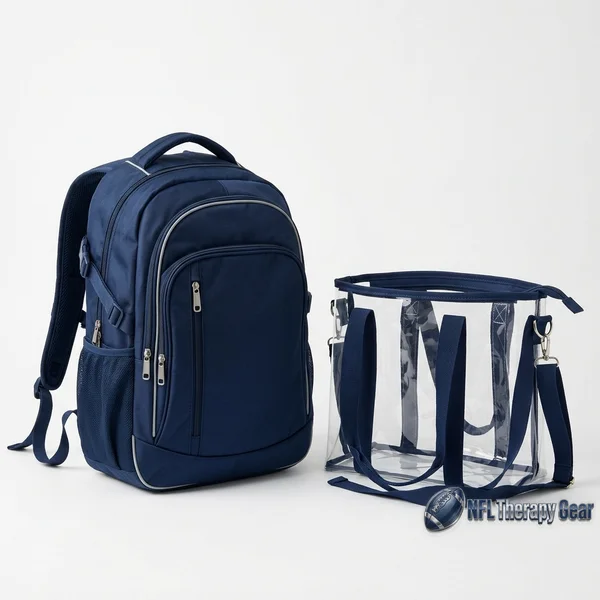
Approved bag formats under the policy include clear plastic, vinyl, or PVC bags that do not exceed twelve inches by six inches by twelve inches in dimension; one-gallon clear plastic freezer bags (resealable); and small clutch bags approximately the size of a hand (four-and-a-half inches by six-and-a-half inches), with or without a handle or strap, which need not be clear. These size and material restrictions allow security personnel to visually inspect bag contents without physical searching, improving entry speed while maintaining security standards.
Team-branded clear stadium bags — manufactured specifically to comply with NFL size and transparency requirements while incorporating team logos, colors, and design elements — provide the intersection of policy compliance and team-identity expression. These purpose-built clear bags eliminate the guesswork of whether a particular bag meets venue requirements, as their dimensions are designed to the policy’s exact specifications.
Non-game venue considerations vary from NFL stadium policy. College football venues, concert halls, and other event spaces may implement their own bag policies with different size and format requirements. Fans who attend events at multiple venue types benefit from owning clear bags in several sizes, ensuring compliance regardless of the specific venue’s policy.
Backpacks
Team-branded backpacks serve daily-use and travel purposes beyond game-day attendance. The backpack format distributes weight across both shoulders, making it the most ergonomically sound carrying option for heavier loads — laptops, textbooks, gym equipment, and travel essentials that smaller bag formats cannot accommodate comfortably. Team branding on a daily-use backpack creates continuous team-identity display throughout commuting, campus activities, and everyday errands.
Construction quality in team backpacks varies significantly. Premium options use ripstop nylon or ballistic polyester exteriors that resist tearing, abrasion, and water penetration; reinforced stress points at strap attachment, zipper endpoints, and bottom panel; and padded compartments for laptop and tablet protection. Budget alternatives may use lighter-weight materials without reinforcement, suitable for casual and light-duty use but potentially inadequate for daily commuting with heavy loads.
Organizational features — multiple compartments, internal pockets, pen loops, key clips, and dedicated electronics sleeves — determine how effectively the backpack manages the variety of items fans carry. Backpacks designed for daily professional or academic use benefit from extensive organization that separates items by type and frequency of access. Backpacks intended primarily for game-day use may prioritize volume over organization, providing open space for the bulky items (extra layers, rain gear, seat cushions) that stadium attendance requires.
Padded shoulder straps and back panels affect carrying comfort during extended wear. Ergonomic strap designs that curve around shoulder contours distribute weight more comfortably than flat, straight straps that concentrate pressure on narrow contact areas. Mesh-backed panels promote airflow between the pack and the wearer’s back, reducing the perspiration buildup that solid-backed packs cause during warm-weather carrying.
Sling and Crossbody Bags
Sling bags — single-strap bags worn diagonally across the body — provide compact carrying capacity with hands-free convenience. The crossbody wearing position keeps the bag secure against the wearer’s torso while allowing quick access through front-positioned openings. Team-branded sling bags serve fans who need to carry essentials (phone, wallet, keys, sunglasses, sunscreen) without the bulk and weight of a full backpack.
The compact dimensions of many sling bags position them within the small clutch bag category of stadium clear bag policies, though compliance depends on specific dimensions and venue interpretation. Checking specific venue requirements before attending with a sling bag prevents the gate-entry rejection that occurs when bags exceed the specific dimensions the venue enforces.
Anti-theft features — hidden zippers, RFID-blocking pockets, and slash-resistant straps — add security value to sling bags worn in crowded stadium environments where pickpocketing and opportunistic theft can occur. These security features protect personal items during the distracted, densely packed conditions that stadium attendance creates, where attention focused on the game reduces awareness of surroundings.
Drawstring Bags
Drawstring bags — lightweight bags with cord-closure openings and cord shoulder straps — provide the most portable, packable, and affordable team-branded carrying option. These simple bags fold flat for storage when not in use, occupy minimal space in larger bags or vehicle compartments, and unfold to provide useful carrying capacity when needed. Their minimal weight makes them suitable as secondary bags carried inside primary bags for unexpected carrying needs.
Material quality in drawstring bags ranges from thin promotional-grade polyester (suitable for single-event use) to reinforced ripstop nylon with reinforced corners and padded cord straps (suitable for regular daily use). The price difference between these quality tiers is modest, making the upgraded materials worthwhile for fans who will use the drawstring bag frequently rather than as a one-time promotional item.
Clear drawstring bags combine the simple, packable format of drawstring construction with the transparency that stadium policies require. These hybrid bags provide stadium-compliant carrying in the lightweight, affordable drawstring format, creating game-day carrying solutions that cost a fraction of structured clear bag alternatives while meeting the same venue entry requirements.
Messenger and Tote Bags
Messenger bags — single-strap, flap-closure bags worn crossbody — provide carrying capacity intermediate between sling bags and backpacks, with a professional-casual aesthetic that suits work environments where backpacks may feel too casual. Team-branded messenger bags serve fans in professional contexts where the bag’s appearance communicates both organizational competence and personal identity.
Tote bags in team designs provide open-top carrying capacity suitable for shopping, beach trips, and casual outings where quick-access convenience outweighs the security that closed-top bags provide. Team-branded totes serve as grocery bags, beach bags, and general-purpose carrying solutions that display team identity during routine errands and leisure activities.
Canvas and waxed canvas tote construction provides durability and water resistance in a material that improves in appearance with age and use. Unlike synthetic materials that simply deteriorate, quality canvas develops a patina and character that adds visual interest over time, creating bags whose appearance improves rather than degrades through years of regular use.
Material Considerations
Polyester dominates team bag construction due to its combination of durability, water resistance, color vibrancy for printed team graphics, and affordable production cost. Denier rating — the measurement of polyester fiber thickness — indicates material durability, with higher denier numbers representing thicker, more durable fabric. Six-hundred-denier polyester provides a good balance of durability and weight for most bag applications, while one-thousand-denier and above provides premium durability appropriate for heavy-duty daily use.
Water resistance varies between water-resistant (repels light rain and splashes) and waterproof (prevents water entry during sustained exposure). Most team bags provide water-resistant treatment that handles incidental moisture exposure adequately but cannot withstand heavy rain or submersion. Fans who attend outdoor games in all weather conditions benefit from bags with sealed seams and waterproof construction that protects contents during the sustained rain exposure that uncovered stadium seating produces.
Zipper quality affects both bag security and long-term durability. Self-repairing zippers that realign after partial separation, weatherproof zippers with protective flaps that prevent water intrusion, and metal zipper pulls that resist the breaking that plastic pulls frequently suffer all contribute to bag longevity and functional reliability.
Travel and Overnight Bags
Team-branded duffel bags and weekender bags serve the travel needs of fans attending away games, road trips, and multi-day football events. These larger-format bags accommodate clothing, toiletries, and travel essentials in team-branded packaging that displays fan identity throughout the travel experience — from departure through airport or highway transit to hotel arrival in the opposing team’s market.
Carry-on compliant team bags — sized to fit airline overhead compartments and under-seat spaces — serve the practical constraint of air travel while providing team display throughout the flying experience. The visibility of a team bag on an airplane creates social connection opportunities with fellow fans making the same trip and establishes team presence in airports and transit spaces far from the team’s home market.
Packing cubes and travel organizers in team themes bring internal bag organization to the travel bag category. Team-colored packing cubes separate clothing types within duffel bags, preventing the compressed jumble that unorganized bag packing creates. These small organizational accessories add team identity to items that only the bag’s owner sees during packing and unpacking, extending the team-themed experience into private travel logistics.
Tailgating Carry Solutions
Tailgate gatherings require carrying equipment — portable chairs, coolers, grilling supplies, and food containers — that standard bags cannot accommodate. Team-branded cooler bags combine insulated beverage and food storage with team-identity display, serving the tailgate’s primary function (keeping beverages cold) while adding team branding to the gathering’s most-used piece of equipment.
Insulated cooler backpacks provide hands-free cold-storage carrying that standard cooler designs cannot match. The backpack format distributes cooler weight across the shoulders, freeing hands for carrying additional tailgate items across the parking lot distances that separate vehicles from designated tailgate areas. Team-branded cooler backpacks combine this ergonomic carrying advantage with team-identity expression, creating multi-function tailgate accessories.
Kids and Youth Bags
Team-branded backpacks sized for children serve dual school and game-day purposes. Smaller dimensions, lighter materials, and adjustable straps accommodate growing bodies while team branding creates school-day team-identity expression that connects children to family fandom during the hours spent away from home. Youth team backpacks are among the most requested back-to-school items for young fans, providing functional school supplies carrying with the team identity that children display proudly among peers.
Lunch bags and pencil cases in team themes extend the school-use team-bag category into accessory formats that children interact with multiple times daily. A team lunch bag opened at midday and a team pencil case accessed throughout class create repeated team-connection moments that accumulate into a school-day experience consistently reinforced with team-identity presence.
Sustainability Considerations
Environmentally conscious fans increasingly seek team bags made from sustainable materials — recycled polyester produced from post-consumer plastic bottles, organic cotton canvas, and bags manufactured through certified fair-labor processes. These sustainable options provide team-identity carrying with reduced environmental impact, addressing the growing consumer preference for products whose production aligns with environmental responsibility values.
Durability as sustainability — selecting high-quality bags that last for years rather than disposable alternatives that require frequent replacement — reduces the total environmental footprint of team bag ownership. A premium team backpack that serves reliably for five or more years replaces three to five budget alternatives that would have been produced, shipped, and eventually discarded over the same period.
Customization and DIY
Iron-on patches, embroidered appliqués, and fabric paint allow fans to customize plain bags with team-themed designs, creating personalized carrying accessories at costs below pre-branded alternatives. These DIY customization techniques also enable fans to add personal elements — names, jersey numbers, commemorative dates — that standard team merchandise does not offer, producing individually unique bags that combine team identity with personal significance.
Pin and patch collections displayed on backpacks create evolving visual narratives of fan experiences — each pin representing a game attended, a stadium visited, or a season milestone achieved. This accumulated display transforms the backpack from a static team-branded object into a living document of fan history that grows with each meaningful experience the fan adds to their collection.
Care and Maintenance
Bag cleaning maintains both appearance and hygiene. Exterior surfaces can be wiped clean with damp cloths and mild soap for most nylon and polyester bags. Interior cleaning — shaking out debris, vacuuming pocket interiors, and wiping spill residue — prevents the odor and staining that accumulated interior contamination causes over months of daily use. Machine washing is generally not recommended for structured bags with padded components, as water saturation can degrade padding materials and compromise structural integrity.
Storage between uses should maintain the bag’s shape. Stuffing bags with crumpled paper or packing material during extended storage prevents the creasing and deformation that collapsed storage causes in structured bags. Hanging bags by their straps or loops preserves shape while keeping them accessible and visible for selection when needed.
Zipper maintenance — periodic application of zipper lubricant to slider tracks — prevents the stiffening and jamming that dirt accumulation in zipper teeth causes over time. Smooth zipper operation depends on clean, lubricated tracks that allow the slider to pass without the resistance that contaminated teeth create. A few seconds of preventive lubrication during cleaning sessions prevents the frustrating zipper failures that neglected maintenance eventually produces.
Warranty awareness provides protection against manufacturing defects that may not appear until the bag has been in use for months. Quality bag manufacturers offer warranties ranging from one year to lifetime coverage against material and construction defects. Registering the bag’s warranty at purchase and retaining the receipt creates the documentation needed to obtain replacement if manufacturing-related failures occur during the coverage period. Understanding what the warranty covers — and what it excludes, such as normal wear and intentional damage — sets realistic expectations for the manufacturer’s responsibility versus the owner’s maintenance obligation.
Gifting Bags
Team bags make practical gifts that recipients use immediately and continuously. Unlike decorative gifts that may not fit the recipient’s home aesthetic, a quality team backpack or clear stadium bag serves functional purposes that ensure regular use regardless of the recipient’s decorating preferences. The daily visibility of a carried bag also extends the gift’s team-identity impact beyond the home into public spaces where the bag accompanies the fan throughout their daily activities.
Stadium clear bags make particularly effective pre-season gifts, arriving before the first game of the year when the recipient needs compliant stadium carrying but may not have purchased one independently. The practical timing of this gift — providing something needed just when it becomes needed — demonstrates thoughtful gift selection that generic team merchandise given at random times cannot match.
References:
- NFL.com — Official Fan Bag Collection and Stadium Policies
- NFL Operations — Stadium Clear Bag Policy Guidelines
- ASTM International — Bag Material and Durability Standards
- Cotton Incorporated — Canvas and Textile Research
- U.S. Consumer Product Safety Commission — Bag Safety Standards