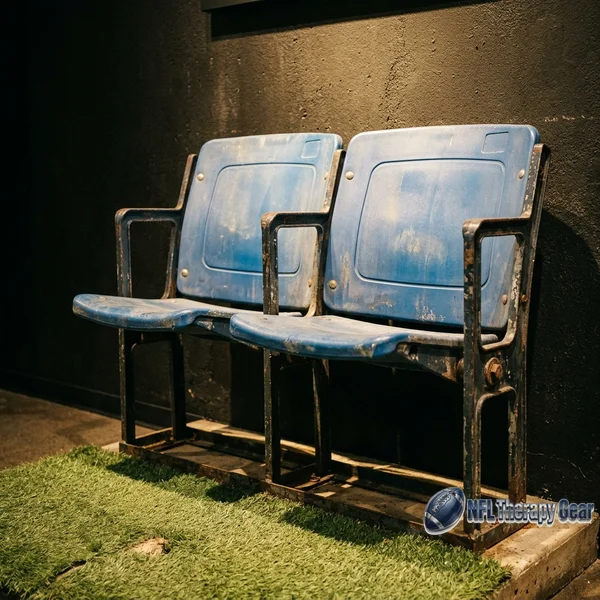
Stadiums are the largest pieces of memorabilia in professional football — too big to collect, but not too big to produce collectible fragments when their useful lives end. When a stadium is demolished, renovated, or decommissioned, pieces of the structure itself enter the memorabilia market: seats, turf sections, bricks, signage, goal posts, and architectural elements that carry the accumulated significance of every game, every crowd, and every season the building hosted.
Stadium memorabilia occupies a unique psychological position among football collectibles because stadiums are experienced communally. A game-worn jersey connects to a single player’s performance. A stadium seat connects to every fan who sat in it, every game they watched, every cheer and groan the seat absorbed across decades of Sundays. The memories embedded in stadium artifacts are collective — they belong to communities, not individuals — and this shared significance gives physical stadium remnants an emotional weight that transcends their material composition.
Stadium Seats: The Most Personal Artifacts
Stadium seats are the most commonly available category of venue memorabilia, partly because stadiums contain tens of thousands of them and partly because they are among the most personally resonant pieces a fan can own. A specific seat connects to a specific location in the stadium — a vantage point from which particular views of the field, the scoreboard, and the surrounding structure were available. Fans who occupied the same seats season after season develop relationships with those physical locations that make the seats meaningful beyond their function as furniture.
The physical characteristics of stadium seats reflect the era and economic circumstances of their installation. Wooden slat seats from mid-century stadiums have a warmth and craftsmanship that plastic bucket seats from the 1970s and 1980s lack, while modern cushioned seats with cup holders and wider spacing reflect contemporary expectations for spectator comfort. Each generation of seating design communicates something about the stadium experience its users would have had — whether they sat on narrow wooden planks shoulder-to-shoulder with neighbors or spread across wide, padded seats with personal armrests.
Paint layers on stadium seats accumulate over decades of maintenance repainting, creating visible cross-sections of color history when surfaces are scratched or chipped. A seat that appears blue on its surface may reveal layers of green, yellow, and gray beneath the current coat — each layer representing a season or renovation when the seating was refreshed with new paint. These paint histories, visible in cross-section, provide physical evidence of the aesthetic changes the stadium underwent during its operational life.
Row and seat number markings add specificity that enhances the personal connection between seat and owner. A seat identified as “Section 234, Row F, Seat 12” can be matched to a specific point in the stadium’s seating chart, allowing the owner to identify exactly where in the building their artifact originated. For season ticket holders who occupied specific seats for years, acquiring their actual seat from the stadium creates a direct, documentable connection between their game-day experience and the physical object in their home.
Playing Surface Artifacts
Pieces of playing surface — whether natural grass turf or artificial playing material — carry the most direct connection to competitive action of any stadium artifact. The field is where the games happened, where records were set, where championships were won and lost. Owning a piece of that surface provides a tangible link to every play that crossed it.
Natural grass turf is typically sold in small sections — squares or rectangles of sod that include the grass, root structure, and a layer of underlying soil. These living artifacts require prompt transplanting or preservation treatment to prevent decomposition. Some buyers plant their turf sections in their own yards, attempting to grow grass descended from the same stock that covered a professional football field. Others preserve their sections through drying, pressing, or encapsulation in display cases that halt biological deterioration while maintaining the turf’s visual appearance.
Artificial turf presents different preservation characteristics. Synthetic playing surfaces do not decompose biologically, making them inherently more stable for long-term display. However, artificial turf can fade, become brittle, or lose its infill material over time, particularly when exposed to UV light or stored in conditions with extreme temperature variation. Display cases with UV filtering protect artificial turf samples from the light-induced degradation that is their primary long-term preservation concern.
Painted field markings — yard lines, team logos, end zone lettering, and hash marks — add visual interest and identification value to turf sections. Pieces that include visible field markings are generally more desirable than unmarked sections because the markings provide visual evidence of the piece’s origin and create more visually engaging display pieces. End zone sections featuring team names or logos are among the most sought-after turf pieces because they combine playing surface authenticity with franchise-specific branding.
Architectural and Structural Elements
When stadiums are demolished, their structural components — bricks, concrete sections, steel beams, railing segments, and architectural details — become available as collectible remnants. These pieces lack the personal connection of seats or the game-action association of turf, but they carry the building’s institutional identity in their materials and craftsmanship.
Bricks from stadium exteriors are popular collectible items because they are compact, durable, and visually distinctive. Many stadiums used specific brick colors, sizes, or laying patterns that give their bricks recognizable characteristics distinguishable from generic building materials. Some demolition salvage operations stamp bricks with authentication markings before distribution, providing provenance documentation for pieces that might otherwise be indistinguishable from common building materials.
Signage — including stadium name signs, section markers, directional indicators, and advertising displays — provides large-scale display pieces with strong visual impact. Stadium name signs are particularly valued because they carry the venue’s identity in bold, readable form, creating display pieces that immediately communicate the artifact’s origin and significance. The size of signage artifacts presents storage and display challenges that limit their appeal to collectors with appropriate space.
Goal posts represent the physical infrastructure most directly connected to scoring — the structures through which field goals and extra points must pass to count. Sections of goal posts from historic stadiums, sometimes marked with game-specific information, carry the dramatic associations of close games, last-second kicks, and championship-deciding plays. Their distinctive yellow-painted tubular steel construction makes them immediately recognizable as football artifacts even when displayed outside a football context.
Commemoration Through Stadium Models
Scaled architectural models of historic stadiums provide an alternative to physical salvage for fans who want to commemorate venues that no longer exist. These models, produced at various scales from desktop miniatures to substantial display pieces, reproduce the exterior and sometimes interior features of stadiums with varying degrees of architectural accuracy.
Premium stadium models are produced through careful architectural research, often working from original building plans, historical photographs, and measured surveys conducted before demolition. The most accurate models reproduce structural details, seating arrangements, scoreboard designs, and surrounding landscaping with precision that allows viewers to recognize the modeled venue from its features rather than relying on labels or placards for identification.
Construction materials for stadium models range from injection-molded plastic for mass-produced items to laser-cut wood, cast resin, and individually assembled components for premium offerings. Some artisan model builders produce one-of-a-kind or limited-edition pieces that treat stadium models as architectural art rather than merchandise, commanding attention through craftsmanship quality that elevates them beyond typical sports souvenirs.
Stadium Farewell Ceremonies
The final game played in a stadium before its closure or demolition generates its own category of memorabilia. Teams typically treat these farewell events as commemorative occasions, producing special programs, tickets, and merchandise that mark the venue’s last chapter. The emotional intensity of farewell games — fans saying goodbye to a place that hosted their formative sports experiences — creates a charged atmosphere that elevates every artifact from the event.
Farewell game programs often include extensive historical retrospectives covering the stadium’s construction, its notable games, its architectural character, and its cultural significance within the community. These programs serve simultaneously as game-day reference material and as permanent memorial publications, and their editorial content typically exceeds the depth of regular-season programs. The production quality of farewell programs reflects their commemorative purpose — heavier paper stock, more color pages, and higher-quality photography distinguish them from standard issues.
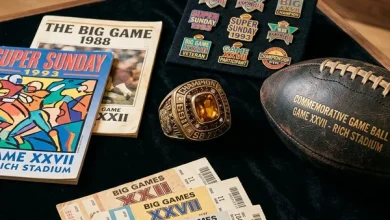
Tickets from final games carry the specific date and event identification that connects them to the stadium’s last competitive moment. Unlike tickets from regular games, which may hold significance only for fans who attended, farewell game tickets carry universal significance as artifacts that document the precise endpoint of a stadium’s operational life. Many fans retain these tickets as personal mementos even when they typically discard tickets from other games.
Ceremonies held during farewell events often involve the distribution of small commemorative items to attendees — coins, patches, lapel pins, or small fabric squares cut from commemorative banners. These distributed items create a class of memorabilia that was given rather than purchased, carrying the additional significance of having been present at the farewell event and received directly from the organizing institution.
Renovation-Era Artifacts
Stadium renovations — which fall short of complete demolition but involve substantial structural modification — produce their own streams of memorabilia. Seats removed during reseating projects, sections of concourse flooring replaced during renovation, and structural elements displaced by expansion or reconfiguration become available as artifacts that represent specific chapters in a stadium’s ongoing history rather than its final conclusion.
The distinction between renovation artifacts and demolition artifacts matters for collectors who value historical precision. A seat removed during a 1995 renovation of a stadium that continued operating until 2015 represents a different historical moment than a seat removed during the stadium’s final demolition. The renovation-era seat carries the character of the stadium during the period it was installed — the paint colors, the material choices, the wear patterns of a specific era — while the demolition-era seat carries the character of the stadium’s final years.
Scoreboard components removed during technology upgrades represent a particularly interesting renovation artifact category. Mechanical scoreboards with flip-card numbers, incandescent bulb message boards, and early electronic displays were replaced by modern LED systems over the decades, and components from these superseded systems carry the visual character of the eras they served. A section of mechanical scoreboard from a 1960s installation communicates something fundamentally different about the game-day experience than a pixel panel from a 2010s LED display.
Documentation and Provenance
Provenance — the documented history of an item’s origin and ownership — is particularly important for stadium memorabilia because the physical items themselves can be difficult to authenticate without documentation. A concrete block is a concrete block unless documentation establishes that it came from a specific stadium. A piece of turf is indistinguishable from lawn grass without evidence connecting it to a professional playing surface.
Official demolition and renovation programs that sell memorabilia directly to the public provide the strongest provenance. These programs typically include certificates of authenticity, numbered identification, and sometimes photographic documentation of the removal process. Items acquired through official channels carry institutional backing that independent salvage pieces lack.
Photographic documentation of removal and acquisition creates visual provenance records that supplement written certificates. Photographs showing a specific seat being unbolted from a specific section, a turf section being cut from a specific field location, or a piece of signage being removed from a specific wall provide compelling evidence that connects the artifact to its claimed origin in ways that written documentation alone cannot match.
Maintaining provenance documentation is essential for preserving the artifact’s significance over time. Certificates, photographs, and any accompanying documentation should be stored separately from the artifact itself — in archival-quality enclosures that protect paper items from the deterioration that could render provenance records illegible or unstable. Digital copies of provenance documents provide backup protection against physical loss or damage of original documentation.
Display and Integration
Stadium memorabilia presents unique display challenges due to the varied sizes, shapes, and materials involved. A collection that includes a full stadium seat, a turf section, a brick, and a piece of signage requires different display approaches for each item while maintaining visual coherence across the collection.
Contextual display — presenting artifacts alongside photographs, programs, or other memorabilia from the same stadium — creates narrative depth that enhances the significance of individual pieces. A seat displayed beside a photograph showing that section of the stadium during a game, accompanied by a program from a notable event hosted at the venue, tells a story that none of these items can tell independently. This contextual approach transforms isolated objects into components of a unified narrative about a specific place and its role in football history.
Dedicated stadium rooms or themed display areas in game rooms and home entertainment spaces provide the most immersive presentation of stadium memorabilia. Collectors who assemble multiple artifacts from the same venue can create environments that evoke the atmosphere of the stadium itself — seats arranged facing a screen, turf sections underfoot or displayed on tables, signage mounted on walls, and photographs filling the spaces between physical artifacts. These immersive installations transform memorabilia from passive display objects into active environmental elements that shape the mood and character of the space they occupy.
Material-specific preservation considerations affect long-term display decisions. Metal artifacts — seats with steel frames, signage with aluminum backing, goal post sections — require periodic inspection for rust and corrosion, particularly in humid environments. Fabric and textile elements — including seat cushions, banner fragments, and commemorative flags — need protection from UV fading and moth damage. Concrete and masonry pieces are relatively stable but can produce dust through surface erosion if left unsealed. Addressing each material’s specific vulnerabilities through appropriate display conditions and periodic maintenance ensures that stadium artifacts retain their character and structural integrity for decades beyond the venues they represent.
The community dimension of stadium memorabilia distinguishes it from most other collecting categories. Stadiums are shared spaces that generate collective memories across entire metropolitan populations. When a fan displays a piece of their city’s demolished stadium in their home, they are preserving not just a personal connection but a community connection — maintaining a physical link to a place that thousands of other families also considered part of their weekend traditions and seasonal rhythms. This communal significance gives stadium artifacts a social resonance that purely individual memorabilia categories, such as autographs or personal collections, do not carry in the same way.
Stadium artifacts carry a particular emotional resonance for fans who attended games at the venues they represent. These pieces are not just memorabilia — they are fragments of personal experience made physical, tangible connections to Sunday afternoons spent in places that no longer exist. The demolished stadium lives on in the memories of its visitors, and the physical artifacts salvaged from its structure give those memories material form that can be held, displayed, and shared across generations of fans.
References:
- Pro Football Hall of Fame — Stadium History and Venue Collections
- NFL.com — Stadium Heritage and Venue Database
- Smithsonian National Museum of American History — Architectural Preservation Collections
- American Institute for Conservation — Object Conservation Standards
- National Trust for Historic Preservation — Architectural Heritage Resources