Before smartphones displayed real-time statistics and high-definition screens replayed every angle of every play, fans relied on a folded, stapled publication to orient themselves at the stadium. The game program was part reference guide, part souvenir, part advertisement vehicle — a modest publication that served immediate practical purposes and, through the accumulation of decades, became a window into how professional football presented itself to its audience at every stage of its evolution.
Game programs are among the most historically rich categories of football memorabilia because they contain not just images and statistics but editorial voice. They reveal what teams thought their fans wanted to read, what advertisers believed football audiences would buy, and what the league itself considered worth celebrating. A program from 1952 tells a different story about professional football’s self-image than a program from 1985, and the differences illuminate cultural shifts that statistics alone cannot capture.
Early Programs: The Foundation Years
The earliest professional football game programs were simple documents — often single sheets folded in half, listing team rosters and perhaps a few advertisements from local businesses. Printing technology limited what was possible, and the modest economics of early professional football limited what was practical. Teams in the 1920s and early 1930s produced programs that resembled church bulletins more than the glossy publications that would come later.
These early programs were typically produced locally, printed by neighborhood print shops with whatever typefaces and graphic elements happened to be available. Consistency between programs from different teams — or even between programs from the same team across different weeks — was minimal. Cover designs varied from typographic-only layouts to simple line drawings, with occasional photographs appearing as printing capabilities expanded through the 1930s.
The informational content of early programs reflected the sport’s local, intimate character. Roster listings included player weights and heights but often omitted the detailed statistical summaries that later programs would feature. Advertisements came from local businesses — hardware stores, automobile dealerships, restaurants, and clothing shops within the team’s immediate community. These advertisements provide historians with valuable snapshots of local commerce and consumer culture during different periods.
Paper quality in early programs was generally poor by modern standards. Newsprint-grade paper was common, chosen for its low cost rather than its archival qualities. This choice of material has significant implications for surviving examples: newsprint deteriorates rapidly when exposed to light, heat, and humidity, and programs printed on this stock show pronounced yellowing, brittleness, and fragility compared to those printed on higher-quality paper.
The Television Era Transformation
Television’s arrival in the 1950s and its expansion through the 1960s transformed game programs in ways that went beyond production quality. As football became a televised entertainment product, programs evolved from functional reference documents into commemorative publications designed to enhance the stadium experience and serve as lasting keepsakes.
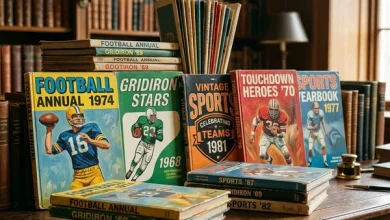
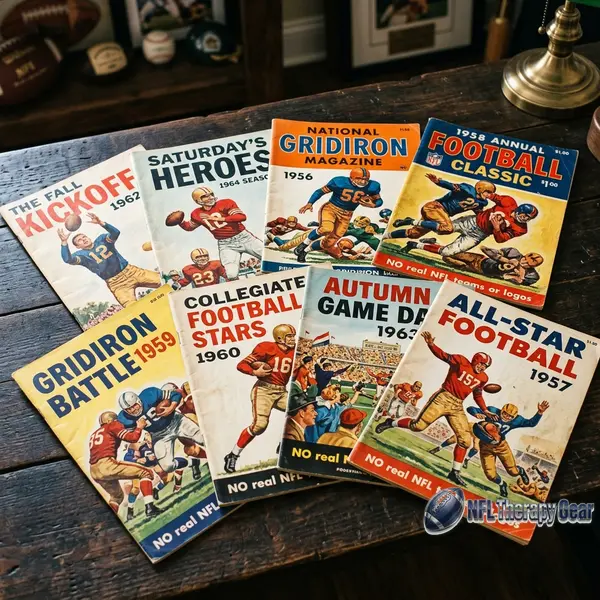
Cover art became a focal point of program design during this period. Teams commissioned original artwork — often dramatic action illustrations rendered in bold colors and dynamic compositions — that elevated the program from disposable reference material to collectible souvenir. Artists like Lon Keller, who created iconic cover illustrations for multiple NFL teams through the 1960s and 1970s, brought genuine artistic talent to program design, creating images that stand on their own as examples of commercial sports illustration.
Interior content expanded significantly. Feature articles profiling key players, previews of upcoming opponents, historical retrospectives, and behind-the-scenes stories gave programs editorial depth that rewarded reading beyond the practical need for roster information. Photography improved dramatically as printing technology advanced, with action shots and player portraits achieving the clarity and visual impact that made programs worth keeping after the final whistle.
The advertising landscape within programs also matured. National brands replaced or supplemented local advertisers as football’s audience expanded beyond regional markets. Beer companies, automobile manufacturers, airlines, and tobacco brands — reflecting the advertising norms of their respective decades — purchased prominent positions within programs, and their advertisements provide a running record of changing consumer marketing strategies.
Page counts increased substantially through this era. Programs that had been eight or twelve pages in the pre-television period grew to thirty, forty, and eventually sixty or more pages as editorial and advertising content expanded. Binding methods evolved from simple saddle-stitching (stapling) to perfect binding (glued spines) for thicker issues, reflecting the publication’s transition from pamphlet to magazine format.
Design Evolution Through the Decades
Tracking program design across decades reveals clear aesthetic trends that parallel broader movements in graphic design and commercial publishing. The evolution is not merely cosmetic — it reflects changing ideas about how visual communication works and what audiences expect from printed materials.
Programs from the 1950s typically featured illustrated covers with limited color palettes, often working within two or three colors due to printing cost constraints. Interior layouts followed newspaper-influenced conventions: columnar text, small photographs, and dense typographic pages that prioritized information density over visual breathing room.
The 1960s and early 1970s saw a loosening of these conventions. Photography began replacing illustration on many covers, though some teams maintained the illustrated tradition into the 1980s. Interior layouts incorporated larger photographs, more white space, and bolder typography that reflected the influence of contemporary magazine design. Color photography became standard for editorial content, replacing the black-and-white or limited-color images of earlier decades.
By the 1980s and 1990s, programs had fully adopted the visual language of commercial magazine publishing. Full-bleed photography, sophisticated typography, computer-generated graphics, and professional art direction produced publications that competed visually with mainstream consumer magazines. Some teams hired dedicated creative directors to oversee program design, treating each issue as a branding opportunity rather than an afterthought.
Modern programs continue this trajectory, incorporating digital design tools, high-resolution photography, and interactive elements such as QR codes that bridge the printed page with online content. The physical program, however, faces increasing competition from digital alternatives — team apps, stadium screens, and mobile websites that provide the same statistical and roster information that originally justified the program’s existence.
Cover Art as a Distinct Collecting Category
Program covers deserve particular attention because they represent some of the most distinctive commercial art produced in the American sports context. The illustrators and designers who created cover art for NFL programs worked within specific constraints — the need to convey team identity, generate excitement, and fit within printing capabilities — that pushed them toward bold, graphic solutions that continue to resonate visually decades after their creation.
Illustrated covers from the 1940s through the 1970s showcase a range of artistic approaches. Some artists favored realistic depictions of game action, capturing the physicality and drama of football through detailed figurative work. Others adopted more stylized approaches, using strong graphic elements, exaggerated proportions, and symbolic imagery to convey the energy of the sport without literal representation. The most successful covers balanced these approaches, creating images that were immediately recognizable as football while bringing genuine artistic vision to commercial assignment work.
The transition from illustration to photography on program covers was not sudden or universal. Some franchises maintained illustrated covers well into the 1980s, viewing the artistic tradition as part of their visual identity. When photography did take over, it brought its own aesthetic challenges — the need to capture a decisive moment, select images that reproduced well in the printing process, and create covers that stood out among the increasing visual competition for fans’ attention at concession stands and program vendor locations throughout the stadium.
Photography-era covers also reflect advances in sports photography equipment and technique. The shift from medium-format cameras and manual focus to autofocus systems, telephoto zoom lenses, and eventually digital capture changed what photographers could achieve during live game action. Program editors gained access to sharper, more dynamic, and more precisely composed images as the technology evolved, and cover selections from different decades reflect these technological capabilities.
Framing and displaying program covers separately from their publications has become a popular presentation approach among collectors who appreciate the artistic dimension of these works. UV-protective framing preserves cover colors while allowing the artwork to function as wall-mounted decoration. Some collectors commission custom matting that incorporates the program’s date, teams, and historical context alongside the displayed cover, creating presentation pieces that combine visual art with informational narrative.
Special Event Programs
Programs produced for championship games, All-Star games, and other special events occupy a distinct tier within the collecting landscape. These publications typically featured enhanced production values — better paper stock, more color pages, more extensive editorial content, and commemorative elements that distinguished them from regular-season issues.
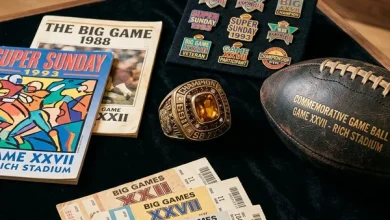
Super Bowl programs receive particularly careful attention from the league and its publishing partners. Each Super Bowl program features extensive coverage of both participating teams, historical retrospectives on previous championships, profiles of the host city and stadium, and editorial content that frames the game within the broader context of the sport’s history. These programs are produced in larger quantities than regular-season issues, reflecting the expanded audience for championship events.
Pro Bowl programs, conference championship game programs, and programs from internationally played games each carry their own collecting interest. Their relatively smaller print runs compared to Super Bowl programs, combined with the specific historical associations they carry, make them sought-after items for collectors who focus on completeness within specific categories.
Inaugural season programs — the first game programs produced after a franchise relocates or an expansion team begins play — hold particular significance. These programs document the birth or rebirth of a football identity in a specific city, often including content about the community’s football history, the new stadium, and the optimism surrounding a fresh start.
Condition Assessment for Programs
Evaluating the condition of vintage game programs involves examining multiple physical characteristics that collectively determine the publication’s state of preservation. Understanding these characteristics helps collectors assess programs accurately and make informed decisions about acquisitions.
Cover condition is the most immediately visible factor. Creasing along fold lines, edge wear from handling, corner bumping from storage, and color fading from light exposure all affect a program’s visual presentation. Staining — from food, beverages, rain, or other substances encountered during game-day use — presents another common condition issue that ranges from minor spotting to significant discoloration.
Spine integrity matters particularly for perfect-bound programs. Cracked or broken spines allow pages to loosen and separate, leading to page loss over time. Saddle-stitched programs face the parallel risk of staple rust, which can stain surrounding pages and weaken the binding’s structural integrity.
Interior condition encompasses page quality, completeness, and the presence or absence of writing or markings. Programs used for scorekeeping during games may contain pencil or pen notations — marks that some collectors view as evidence of game-day use and others consider condition defects. Missing pages, particularly centerfold sections that may have been removed for display, reduce a program’s completeness and affect its desirability among collectors who prioritize original, intact examples.
The distinction between programs that attended games and programs that were purchased but never used at the stadium creates interesting condition dynamics. An unused program may show better physical condition but lacks the experiential connection to a specific game. A program with a ticket stub tucked inside, a hot dog stain on page twelve, and pencil marks tracking the score carries evidence of actual use that some collectors find more compelling than pristine condition.
Storage and Preservation Methods
Preserving game programs requires addressing the specific vulnerabilities of paper-based collectibles. The primary threats — light exposure, humidity fluctuation, acid migration, and physical handling — can be mitigated through appropriate storage practices that balance access with protection.
Acid-free storage materials form the foundation of proper program preservation. Standard cardboard boxes and paper products contain acids that migrate into stored materials over time, causing yellowing, brittleness, and eventual disintegration. Archival-quality storage boxes, backing boards, and interleaving tissue papers are manufactured from acid-free materials that do not contribute to chemical deterioration.
Clear protective sleeves designed for magazine-format publications allow programs to be viewed without direct handling. Polypropylene sleeves are preferred over polyethylene for long-term storage because they are more chemically stable and less likely to develop static charge that attracts dust particles to the program’s surface.
Flat storage is generally preferable to vertical storage for programs, particularly for older issues with weakened bindings or brittle covers. Vertical storage concentrates weight on the spine, potentially causing warping and structural stress that accelerates deterioration. Horizontal stacking, with acid-free boards between each program to prevent cover-to-cover contact, distributes weight more evenly.
Temperature and humidity control remains as important for paper preservation as for any other memorabilia category. Paper absorbs moisture readily, and fluctuating humidity causes expansion and contraction cycles that weaken fiber bonds, promote mold growth, and accelerate chemical degradation. Stable conditions between sixty and seventy degrees Fahrenheit with relative humidity between thirty-five and fifty percent represent the ideal range for long-term paper preservation.
Building a Program Collection
Collecting game programs offers multiple organizational approaches, each with its own logic and appeal. Team-focused collections gather programs from every available season of a specific franchise, building a comprehensive visual history of how that team presented itself to its fans across decades. Era-based collections focus on a specific period, assembling programs from multiple teams to create a cross-section of the sport’s visual culture during a chosen timeframe.
Championship game collections represent one of the most popular specialized approaches. Assembling a complete run of Super Bowl programs from Super Bowl I through the present creates a chronological record of professional football’s premier event, with each program reflecting the design sensibilities, team identities, and cultural context of its specific year.
Programs from historic games — record-setting performances, franchise milestones, stadium inaugurals and farewells — carry associations that elevate them beyond their inherent qualities as publications. A program from the final game played in a demolished stadium or the first game played by an expansion franchise connects the physical object to a specific chapter in football history that gives it narrative weight beyond its printing and design merits.
The accessibility of game programs as collectibles remains one of the category’s strengths. While rare vintage programs from the 1920s and 1930s are genuinely scarce, programs from the television era forward were produced in large quantities and remain available across a wide range of condition levels and price points. This accessibility makes programs an approachable category for collectors at all experience levels, offering both the depth to sustain long-term collecting interest and the breadth to accommodate various budgets and organizational preferences.
References:
- Pro Football Hall of Fame — Historical Program Collection and Archives
- NFL.com — League History and Heritage Resources
- Library of Congress — Paper Preservation and Conservation Guidelines
- Smithsonian National Museum of American History — Sports Ephemera Collections
- American Institute for Conservation — Standards for Paper-Based Collections