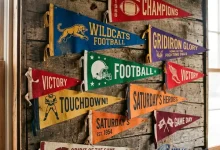

Canton, Ohio, does not look like a city that would house one of America’s most important sports institutions. It is a modest place in northeastern Ohio, a former industrial center whose population peaked decades ago. Yet this small city hosts millions of visitors who come to walk through the circular galleries of the Pro Football Hall of Fame, pausing before bronze busts, pressing their faces against display glass to examine game-worn equipment, and absorbing the cumulative weight of professional football’s history rendered in physical artifacts.
The Hall of Fame is, at its core, a collection of things — jerseys, footballs, helmets, shoes, photographs, trophies, and documents gathered over decades from players, teams, leagues, and families. Each item was selected because it tells a story that words and statistics alone cannot fully convey. Understanding what the Hall contains, how items arrive there, and what they mean within the broader context of football history provides a richer appreciation of both the museum and the sport it celebrates.
The Bronze Busts
The defining visual element of the Pro Football Hall of Fame is its gallery of bronze busts — one for each enshrined member, arranged chronologically in a circular hall that spirals outward as the ranks of inductees grow. Each bust is a portrait in bronze, capturing the inductee’s likeness at or near the peak of their career, rendered by professional sculptors who work from photographs, video, and in many cases direct sittings with the living subject.
The bust creation process begins months before the annual enshrinement ceremony. A commissioned sculptor studies reference materials, often traveling to meet the inductee in person to observe their features from multiple angles and in various lighting conditions. The sculptor works first in clay, building a likeness over weeks of refinement. The clay model undergoes review and approval before being sent to a foundry for bronze casting.
The lost-wax casting process used for Hall of Fame busts follows the same fundamental technique used for sculpture since ancient times. The clay original is used to create a silicone mold, from which a wax replica is produced. The wax is coated in ceramic shell material, heated to remove the wax, and filled with molten bronze. After cooling, the ceramic shell is broken away to reveal the raw bronze casting, which undergoes extensive finishing — chasing, polishing, and patination — to achieve the final appearance.
Each bust weighs approximately thirty-five pounds and sits on a black granite base bearing the inductee’s name, position, teams, and years of professional service. The weight and materiality of bronze communicate permanence and significance — these are not temporary recognitions but enduring monuments that will outlast their subjects and their subjects’ contemporaries. The patina that develops on bronze over time adds to rather than diminishes this effect, giving older busts a warmth and depth that newly cast pieces lack.
The emotional dimension of the bust ceremony — watching a former player or coach stand beside their own bronze likeness, often overcome by the magnitude of the recognition — adds a layer of human significance that transforms the bust from art object into emotional artifact. For visitors who witness these ceremonies or view the busts in their gallery setting, the pieces carry the memory of those emotional moments alongside their artistic and historical qualities.
Game-Worn Equipment in the Collection
The Hall of Fame’s collection of game-worn equipment extends far beyond what is visible in the public galleries. The museum’s archive contains thousands of items — jerseys, helmets, cleats, gloves, and other equipment — from every era of professional football. A fraction of this collection is displayed at any given time, with rotating exhibits highlighting different themes, eras, and individuals.
Game-worn jerseys form the largest single category of equipment in the collection. Each jersey carries visible evidence of its use — grass stains, stretching, repairs, and the general wear patterns created by professional competition. Authentication of game-worn jerseys in the Hall’s collection relies on documentation from team equipment managers, photographic evidence from game broadcasts, and physical examination of construction details consistent with the claimed period of use.
Helmets in the collection span the full history of head protection in professional football. From leather caps of the 1920s and 1930s through the molded plastic shells of the mid-century period to the advanced composite helmets of the modern era, the collection documents the complete evolution of this critical piece of equipment. Each helmet represents not just its specific player and team but the technology and design philosophy of its era.
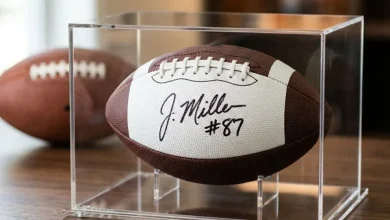
Footballs used in significant games — championship victories, record-setting performances, milestone achievements — occupy a special category within the collection. These balls bear the physical evidence of the moments they participated in: grass stains from the field, scuff marks from handling, and sometimes the slightly deflated feel of a ball that has been gripped, thrown, and caught under the intense pressure of professional competition. The Hall’s football collection includes balls from every Super Bowl and from numerous regular-season games that produced historically significant performances.
Footwear offers a particularly intimate connection to athletic performance. The cleats worn by players during their most significant games show wear patterns that reveal movement habits, playing surface conditions, and the physical demands placed on feet during professional football. Worn-down cleats, muddy soles, and stretched leather tell stories of specific games and specific playing conditions that statistical records cannot capture.
Trophies and Awards
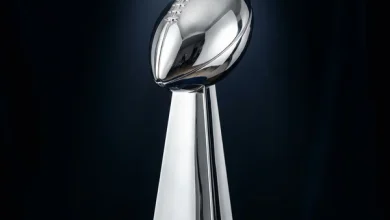
The Hall of Fame houses an extensive collection of trophies and awards that document the sport’s recognition traditions. Championship trophies from the pre-Super Bowl era — some of which are remarkably modest by modern standards — reveal how the sport’s relationship with formal recognition has evolved over the decades.
Early NFL championship trophies were often donated by newspapers, civic organizations, or league sponsors, reflecting the sport’s financial dependency on external support during its formative years. These trophies vary widely in design, materials, and craftsmanship, each reflecting the aesthetic sensibilities and budgetary constraints of its specific era and sponsor.
Individual awards — MVP trophies, All-Pro recognitions, and various other honors — document the sport’s evolving criteria for individual excellence. The physical forms of these awards change over the decades, tracking shifts in award design conventions and manufacturing capabilities. Viewing them chronologically provides a visual history of how the sport has chosen to honor its most distinguished performers.
Documents and Ephemera
The Hall of Fame’s document collection includes items that are historically significant precisely because they were never intended to be preserved. Game plans scrawled on notebook paper, handwritten play diagrams, scouting reports typed on manual typewriters, and personal correspondence between players and coaches provide windows into the operational reality of professional football that polished, official documents cannot match.
Contracts from various eras reveal the economic history of the sport with striking clarity. A player contract from the 1940s, with its modest salary figures and restrictive clauses, tells a story about the power dynamics between players and owners that formal league histories might sanitize. The evolution of contract language, salary structures, and benefit provisions across decades of collected contracts documents the gradual transformation of professional football from a seasonal side job into a major economic enterprise.
Photographs in the collection range from formal team portraits to candid sideline shots, from posed publicity images to action photographs taken during significant games. The photographic collection documents not just the sport itself but the evolving technology used to capture it — from large-format cameras and flash powder to motorized film cameras to digital imaging systems. The technical quality of photographs from different periods provides its own historical narrative about visual media and sports documentation.
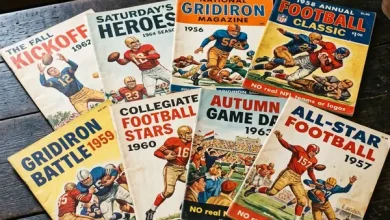
Media guides, team yearbooks, league publications, and promotional materials round out the ephemera collection. These items, produced for immediate practical purposes and never intended for long-term preservation, survive in the Hall’s climate-controlled archives in conditions far better than most copies encountered in private collections or the secondary market.
The Enshrinement Process and Artifact Acquisition
Items enter the Hall of Fame’s collection through several channels. Donations from players, coaches, and their families constitute the primary acquisition method. Many inductees contribute items during or around their enshrinement, choosing pieces that represent their most significant professional moments. These donations are often accompanied by personal context — stories about the game, the season, or the circumstances surrounding the item — that becomes part of the artifact’s permanent record.
Team organizations contribute items related to franchise history, championship seasons, and organizational milestones. These institutional donations tend to be more systematically documented than individual player contributions, with team archivists providing detailed provenance information that supports the museum’s authentication and cataloguing processes.
Unsolicited donations from fans and families occasionally bring unexpected treasures to the collection. Items that have been stored in attics, basements, and family archives for decades sometimes surface when descendants discover their significance and contact the Hall about potential donations. These surprise acquisitions have produced some of the collection’s most historically valuable pieces — items that professional collectors and team archivists had long assumed were lost.
Conservation and Preservation
Maintaining the Hall of Fame’s collection requires ongoing conservation efforts that address the specific deterioration risks associated with each material category. Textile items — jerseys, pants, socks, and other fabric articles — face threats from insect damage, fiber degradation, and color fading that require climate-controlled storage, regular inspection, and periodic conservation treatment.
Leather items — footballs, helmets, shoes, and equipment straps — require humidity management to prevent the cracking and brittleness that accompany drying, alongside protection from mold and mildew that flourish in excessively humid conditions. The museum maintains storage environments within carefully calibrated temperature and humidity ranges designed to minimize both categories of risk.
Paper documents and photographs face acid degradation, light damage, and physical fragility that worsen with age. Archival-quality storage materials, UV-filtered display cases, and controlled access protocols protect these items from the environmental and handling factors that accelerate deterioration. Digital scanning of paper items creates preservation copies that allow researchers to study documents without exposing originals to the risks associated with handling.
Metal items — trophies, coins, commemorative objects — require protection from atmospheric pollutants that cause tarnishing and corrosion. Display cases with controlled atmospheric conditions slow chemical reactions on metal surfaces, while periodic professional cleaning maintains surface appearance without removing the natural patina that contributes to an item’s aged character.
The Visitor Experience
Walking through the Hall of Fame’s galleries creates an experience that differs fundamentally from reading about football history in books or watching historical highlight compilations on screen. Physical proximity to authentic artifacts engages senses that other media cannot reach. Visitors observe the actual size of a jersey worn by a legendary player, notice the grass stains that remain on a pair of cleats from a championship game, and appreciate the weight and craftsmanship of trophies and rings through the glass that separates viewer from object.
The museum’s layout guides visitors through a roughly chronological narrative, beginning with the sport’s earliest years and progressing through its major developmental periods. Interactive exhibits allow visitors to test their knowledge, compare their physical measurements against those of professional players, and experience aspects of the game through multimedia presentations that combine artifacts with video and audio content.
The bust gallery produces the most consistently emotional response among visitors. Standing before the bronze likenesses of players and coaches whose careers spanned different decades creates a sense of continuity that connects the sport’s present to its past. For older visitors who watched these individuals play, the busts trigger personal memories. For younger visitors encountering unfamiliar names, the busts prompt questions and discoveries about football history that extend beyond the museum visit itself.
Educational programming at the Hall extends the museum experience beyond passive viewing. Tours led by knowledgeable guides provide contextual information that enhances understanding of displayed artifacts. Visiting scholars and researchers access the archives for academic projects, producing published work that extends the collection’s educational impact far beyond the physical museum.
Traveling Exhibits and Outreach
The Hall of Fame extends its reach beyond Canton through traveling exhibits that bring selected artifacts to cities and venues across the country. These traveling shows allow fans who cannot visit Ohio to experience a curated selection of the collection’s highlights in their own communities.
Traveling exhibits face unique conservation challenges. Items must be packed, shipped, installed, and returned without damage — a process that requires specialized crating, climate-controlled transportation, and professional handling at every stage. The museum’s registrar and conservation staff develop detailed condition reports for each traveling item, documenting its state before departure and upon return to ensure that no damage occurs during transit.
Event-specific exhibits at Super Bowl locations, NFL Draft events, and league meetings bring Hall of Fame artifacts to the sites of the sport’s major gatherings. These temporary installations connect current events to historical context, placing artifacts from previous championship games, draft selections, or league decisions alongside the contemporary activities they inform.
Digital outreach has expanded the Hall’s ability to share its collection with audiences worldwide. High-resolution photography, virtual gallery tours, and online database access allow researchers and fans to explore the collection remotely. While digital access cannot replicate the physical experience of standing before an artifact, it provides a valuable complement that makes the collection accessible to audiences who may never visit Canton in person.
Partnership programs with schools and educational institutions bring Hall of Fame content into classroom settings. Educational kits containing reproductions of historical documents, lesson plans developed around collection themes, and virtual presentation packages give teachers tools to connect football history with broader curriculum topics in American history, materials science, and cultural studies. These partnerships extend the Hall’s mission beyond entertainment into genuine educational impact that reaches young audiences who may develop lifelong interest in football heritage through classroom exposure.
The Pro Football Hall of Fame’s collection serves as the institutional memory of a sport that has shaped American culture for more than a century. Each item in its galleries and archives represents a moment, a career, or an era preserved in physical form — tangible evidence that the games played on Sunday afternoons and Monday evenings produced something worth keeping. For the fans who visit Canton, these objects transform abstract history into concrete experience, making the past accessible in ways that words and images alone cannot achieve.
References:
- Pro Football Hall of Fame — Official Collections, Archives, and Exhibit Information
- NFL.com — League Heritage and Historical Archives
- American Institute for Conservation — Museum Conservation Standards and Best Practices
- Smithsonian National Museum of American History — Sports Collection Preservation
- American Alliance of Museums — Museum Collection Management Standards